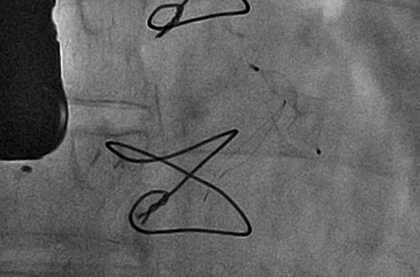
Paravalvular leak is complication derived from incomplete sealing between the implanted prosthesis and the native annulus, which occurs in 5% of all patients who undergo mitral valve replacement and 10% of those who undergo transcatheter aortic valve replacement. This is the most frequent non-structural valve dysfunction.
While mild leaks can be asymptomatic, moderate to severe leaks are associated with heart failure, hemolytic anemia, and high rates of long-term mortality.
Surgical leak repair is indicated for these patients and it is associated with better outcomes than conservative treatment.
Read also: “Multivessel Disease and Severe Carotid Stenosis: How to Proceed”.
Transcatheter reduction has emerged as an alternative for patients for whom repeat surgery is extremely risky. In most single-center series and registries, transcatheter reduction was associated with a reduction in leak severity.
Given the recent advancements in transcatheter techniques (and the reduction of morbidity and mortality rates for repeat surgery), there is no evidence that may warrant choosing one technique over the other for the repair of severe paravalvular leak.
From 1994 to 2014, 231 patients underwent correction of severe paravalvular leak. Among them, 151 underwent repeat surgery and 80 underwent transcatheter reduction.
Read also: “End of Discussion on the Impact of Pacemaker After TAVR?”
Propensity matching was used to compare both groups and assess the effect of either strategy on long-term rates of all-cause death and hospitalization for heart failure.
Over a 3.5-year follow-up, surgical correction was associated with an important reduction in all-cause death or hospitalization for heart failure compared with transcatheter reduction (hazard ratio [HR]: 0.28; 95% confidence interval [CI]: 0.18 to 0.44; p < 0.001). Upon consideration of mortality only, there was a trend favoring repeat surgery (HR: 0.61; 95% CI: 0.37 to 1.02; p = 0.06).
Conclusion
In patients with significant prosthetic leak, surgery was associated with better long-term outcomes compared with transcatheter reduction, but results in important peri-operative mortality and morbidity.
Editorial
The relative advantage of surgery over transcatheter reduction should be interpreted with caution, given the significant differences between groups. While the advantage was still present after adjustment, there may be inadvertent confounding variables, particularly among populations as different as those involved in this study.
Despite the relative advantage of surgery, its high peri-operative risk and the fact that benefits are only evident after 1 year warrant a careful assessment of life expectancy for each particular patient.
Original title: Surgery Versus Transcatheter Interventions for Significant Paravalvular Prosthetic Leaks.
Reference: Xavier Millán et al. J Am Coll Cardiol Intv 2017;10:1959-69.
Get the latest scientific articles on interventional cardiologySubscribe to our weekly newsletter
We are interested in your opinion. Please, leave your comments, thoughts, questions, etc., below. They will be most welcome.