



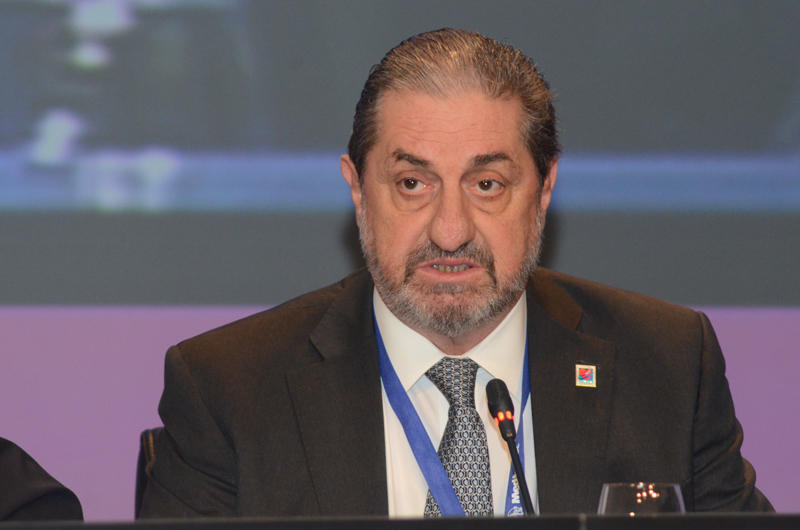
SOLACI CACI 2017 | Tipo II Endoleaks: Tratamiento obligatorio o un miedo infundado

Dr. Hugo Londero
Dr. Hugo Londero

Read articles on the main presentations of the second day of SOLACI-CACI 2017 Congress.

See the presentation by Dr. Hugo Londero, entitled “Tipo II Endoleaks: Tratamiento obligatorio o un miedo infundado”.

3Londero-HugoTypeII


Subscribe to our weekly newsletter

Get the latest scientific articles on interventional cardiology

We are interested in your opinion. Please, leave your comments, thoughts, questions, etc., below. They will be most welcome.

More articles by this author

Is upper-limb aerobic training an effective alternative to lower-limb exercise in peripheral artery disease?

Peripheral artery disease is associated with impaired functional capacity, reduced walking distance, and poorer quality of life, and structured exercise is a class I...

Endoleaks after endovascular repair of complex aortic aneurysms: always reintervene or monitor with CTA?

Endovascular repair of thoracoabdominal aneurysms requiring sealing above the renal arteries, with preservation of visceral vessels using fenestrated and/or branched devices (F/B-EVAR), has become...

A New Asymptomatic Carotid Stenosis Paradigm? CREST-2 Trial Unified Results

Severe asymptomatic carotid stenosis continues to be controversial seeing the optimization of intensive medical therapy (IMT) and the availability lower periprocedural risk revascularization techniques....

Impact of Baseline Systolic Blood Pressure on Blood Pressure Changes Following Renal Denervation

Renal denervation (RDN) is a guideline-recommended therapy to reduce blood pressure in patients with uncontrolled hypertension, although uncertainties remain regarding which factors best predict...

LEAVE A REPLY

Please enter your comment!
Please enter your name here

Related Articles

SOLACI Sessionsspot_img

Recent Articles

TEER plus optimal medical therapy versus medical therapy alone in functional mitral regurgitation

Mitral regurgitation (MR) is a highly prevalent valvular heart disease that, in advanced stages and when left untreated, is associated with reduced quality of...

Hybrid Coronary Revascularization versus Conventional Bypass Surgery in Left Main Coronary Artery Disease

Significant left main coronary artery (LMCA) disease continues to represent a therapeutic challenge, particularly in patients with complex multivessel disease and high SYNTAX scores,...

VECTOR: First Percutaneous Aorto-Coronary Bypass Case, a New Conceptual Approach

Coronary obstruction represents one of the most severe complications associated with transcatheter aortic valve implantation, particularly in valve-in-valve scenarios involving surgical bioprostheses, narrow aortic...
