Transradial access (TRA) is the preferred route for most percutaneous coronary procedures, with proven benefits in reducing vascular complications and shortening recovery time. However, despite its safety, it is not exempt from complications, such as radial artery occlusion (RAO).
Although clinically silent in most cases due to collateral circulation of the wrist and hand, RAO represents a significant limitation for repeat procedures, its use in bypass grafts for surgical revascularization, or the creation of hemodialysis access.
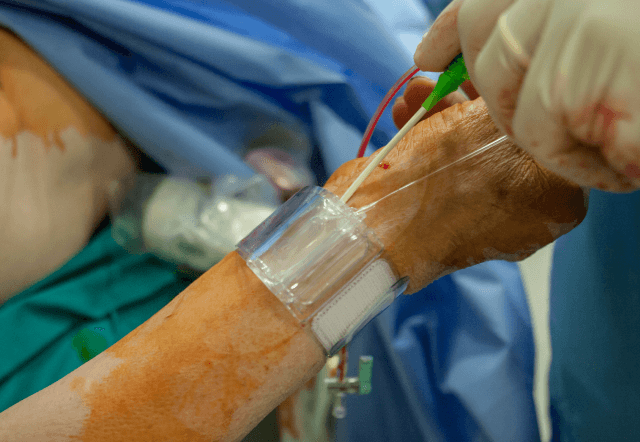
To address this challenge, distal radial access (DRA), performed at the anatomical snuffbox, has emerged as a safe and effective alternative—not only to reduce the incidence of RAO but also to enable retrograde recanalization of previously occluded arteries.
Colletti et al. published an international multicenter study analyzing, retrospectively, a cohort of 110 patients with RAO treated across seven international centers by operators with experience exceeding 200 DRA cases. The mean age was 66 years, and 60% were male. The strategy followed a structured approach, with techniques adapted to the morphology of the distal cap (tapered or blunt), employing drilling or knuckling methods to cross the occlusion, followed by dilatation with dotterization or, in selected cases, balloon angioplasty.
Dotterization (dilation of the segment using the introducer sheath or guiding catheters) was performed in 62% of cases, while balloon angioplasty was used in the remaining 38%. Conversion to sheathless catheters was reported in 47% of patients.
The procedure achieved a technical success rate of 94% and a 30-day radial patency rate of 80%, with a low incidence of acute complications (4.5%: 4 radial perforations and 1 EASY III hematoma), all resolved conservatively. One of the most relevant findings of the multivariate analysis was the identification of the sheathless approach as an independent predictor of 30-day patency (OR 3.07; 95% CI: 1.10–8.59). Conversely, the use of sheaths larger than 6F (OR 0.15) and balloons over 2.25 mm (OR 0.10) was associated with lower patency rates.
Conclusions
This study reaffirms the value of DRA not only as a primary access route but also as a therapeutic tool for radial recanalization, consolidating its role within the modern interventional cardiology toolkit. The implementation of a standardized approach, with special emphasis on less invasive techniques such as sheathless use, could optimize patency outcomes and reduce the need for alternative access routes.
Original Title: Distal Radial Access for Radial Artery Recanalization Multicenter Outcomes and Stepwise Strategies to Maximize Patency.
Reference: Colletti G, Sgueglia GA, Gasparini GL, Ungureanu C, Tsigkas G, Leibundgut G, Cocoi M, Gach O, Boukhris M, Novotný V, Cocco N, Peter L, Natalis A, Novelli L, Benthakhou E, Kákonyi K, Tumscitz C, Achim A, Rusza Z. Distal Radial Access for Radial Artery Recanalization: Multicenter Outcomes and Stepwise Strategies to Maximize Patency. JACC Cardiovasc Interv. 2025 Sep 8;18(17):2140-2151. doi: 10.1016/j.jcin.2025.07.003. PMID: 40930602.
Subscribe to our weekly newsletter
Get the latest scientific articles on interventional cardiology