






Balloon aortic valvuloplasty (BAV) has historically been used either as a bridge strategy, an assessment tool, or even palliative treatment in severe aortic stenosis (AS) patients, particularly unstable ones or with valve replacement contraindications. Although the femoral approach has traditionally been the main access route, it remains associated to a non-negligible complications rate — mainly vascular — comparable to rates seen in TAVR. In this context, the transradial approach, widely mastered by interventional cardiology teams, emerges as an appealing alternative.
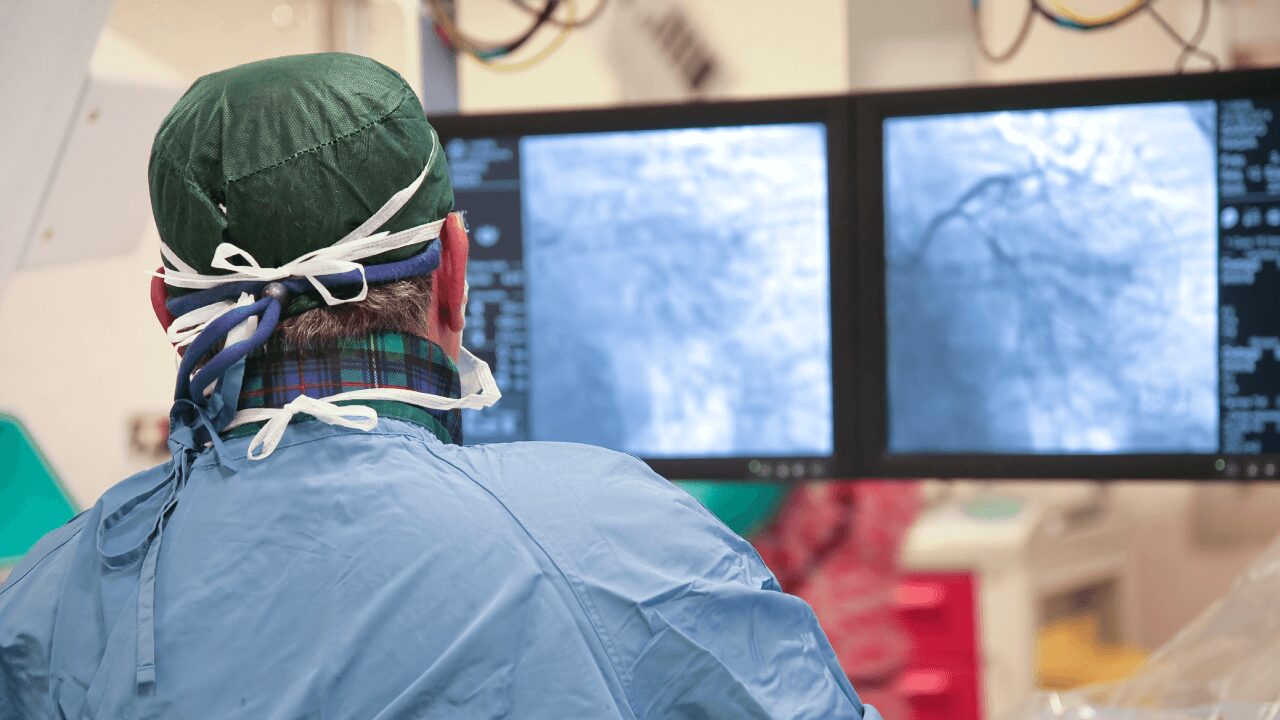
The study presented at JSCAI and conducted at the Henry Ford Health System conducted a comparative analysis between transradial (TRV) and transfemoral (TFV) BAV, assessing technical and hemodynamic success, periprocedural safety, and short-term clinical outcomes.
A total of 253 consecutive patients were included between 2021 and 2024. Propensity-score adjustment and multivariable modeling were used to minimize bias.
TRV was feasible in most cases (96.2%), achieving a hemodynamic success rate similar to TFV (78.1% vs. 75%; p = NS). Notably, in this cohort, the transradial approach was associated with a significant reduction in the composite primary endpoint (VARC-3) — major vascular complications, grade 3–4 bleeding, balloon embolization, periprocedural death, and non-access-related events — with 2.5% vs. 17.5% incidence rates (adjusted OR 0.13; 95% CI: 0.04–0.49; p = 0.003).
There were no differences in periprocedural mortality or in secondary 30-day outcomes (mortality, rehospitalization, discharge failure), which were similar between groups. It is worth noting that transradial patient selection was guided by ultrasound and anatomical criteria (>2.5 mm diameter and no circumferential calcification), excluding patients with AV fistulas or end-stage kidney disease. There was a low conversion rate to the femoral approach (3.8%).
Conclusions
This study supports the feasibility and safety of transradial BAV, with comparable technical and hemodynamic success rates but clearly superior safety profile. The relevance of these findings is particularly significant in frail patients or those at high vascular risk.
Original Title: Comparative Effectiveness of Balloon Aortic Valvuloplasty via Transradial and Transfemoral Access.
Reference: Fang JX, Villablanca PA, Frisoli TM, Engel Gonzalez P, Lee JC, Fram GK, et al. Comparative Effectiveness of Balloon Aortic Valvuloplasty via Transradial and Transfemoral Access. Journal of the Society for Cardiovascular Angiography & Interventions [Internet]. [cited 2025 Nov 18]; Available from: https://doi.org/10.1016/j.jscai.2025.104015.
Subscribe to our weekly newsletter
Get the latest scientific articles on interventional cardiology


 ha sido históricamente empleada como estrategia de “puente”, herramienta de evaluación o incluso tratamiento paliativo en pacientes con estenosis aórtica (EAo) severa, especialmente en aquellos inestables o con contraindicaciones para un reemplazo valvular.)