






Coronary revascularization with drug-eluting stents (DES) is very frequent, especially in acute coronary syndromes, but these metallic stents are permanent foreign bodies that activate the entire inflammatory system.
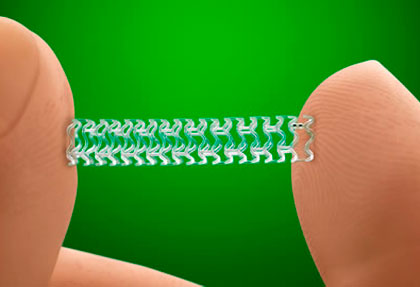
Using bioresorbable stents (BRS) emerged as an alternative to this challenge. Although the initial results of the ABSORB study were not as expected (probably due to a lack of technological development), a new stage in the development of these devices could begin with the new second-generation MAGMARIS stent.
Researchers conducted a single-center analysis of bioresorbable stents implanted from 2012 to 2020 in patients with acute coronary syndromes, following the evolution of the MAGMARIS (MAG) stent in 193 patients and the ABSORB (ABS) stent in 160 patients.
The primary endpoint (PEP) was a safety composite that included all-cause mortality, infarction, and definite or probable thrombosis at 30 days and 1 year.
The mean age was 65 years, 37% of patients had diabetes, 85% experienced hypertension, 4% suffered from atrial fibrillation, and 38% had a prior angioplasty. Patients who received MAG had higher rates of unstable angina and non-ST-segment-elevation acute myocardial infarction. Similarly, they presented a higher ejection fraction (60% vs. 55%; p < 0.001).
Read also: A Nod to Catheter-Guided Thrombolysis in Pulmonary Thromboembolism.
In all cases, correct pre-dilatation and preparation of the lesion for stent implantation was performed. The most frequently treated artery was the anterior descending (AD): it received 1.2 stents/patient and double antiplatelet therapy.
At 30 days and at 1 year, the PEP was in favor of MAG (0% vs. 3.1%; p = 0.018, and 1.5% vs. 8.1%; p = 0.003), led by the presence of infarction and stent-thrombosis at 30 days in patients who received ABS.
At 30 days, target-lesion failure was also lower in MAG. At 12 months MAGMARIS presented lower target-lesion failure, led by lower presence of stent-thrombosis and infarction.
Conclusion
Data from the present study show greater safety and a more favorable clinical evolution of the MAGMARIS Magnesium bioresorbable stent compared with the Absorb polymer stent.

Dr. Carlos Fava.
Member of the Editorial Board of SOLACI.org.
Original Title: Outcomes of the two generations of bioresorbable scaffolds (Magmaris vs. Absorb) in acute coronary syndrome in routine clinical practice.
Reference: Piotr Rola, et al. Cardiology Journal, ON LINE FIRST DOI: 10.5603/CJ.a2022.0047.
Subscribe to our weekly newsletter
Get the latest scientific articles on interventional cardiology



