






Long 48mm Stent XIENCE Skypoint in the treatment of diffuse CAD
Long coronary artery lesions often involve complex decision making since they can be treated either with a long stent or with shorter overlapping stents. Both in registries and meta-analysis, the overlapping technique has been associated to increased target vessel revascularization and increased radioscopy time, when compared against placing a single longer stent.
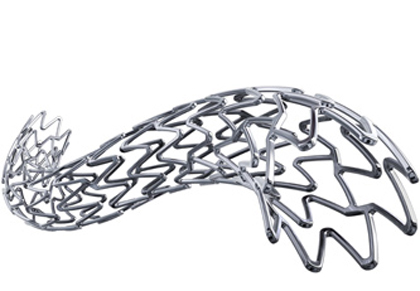
At present, the FDA has approved only one long device to treat this kind of lesions, a 48mm stent. Its limited availability has prompted the SPIRIT 48 study, aiming to assess the safety and efficacy of the chromium-cobalt everolimus eluting XIENCE Skypoint 48 (48mm).
The SPIRIT 48 was a prospective, single arm, open design study carried out in 25 hospitals (US, Taiwan and Australia), including patients ≥18 years of age with evidence of ischemia (unstable angina chronic coronary syndrome, silent ischemia). Angiographic criteria were the presence of native ≥2.5mm and ≤4.25mm diameter coronary stenosis, lesion length >32.0mm and <44.0mm that could be plausibly treated with XIENCE Skypoint 48. Patients who had suffered MI within 48 hours, had ventricular function deterioration (≤30%) or target vessel PCI 6 months prior to procedure, were excluded.
Primary end point was target vessel failure (TVF) at one year, a composite of cardiac death, target vessel related MI and repeat revascularization. Secondary end points included inhospital TLF, at 30 and 180 days. The study also looked at device success rate (≤50% target vessel residual lesion post intervention).
Read also: Useful Predictor of Adverse Events in Complex PCI: BCIS CHIP Score.
It included 105 patients, mean age 67.3, 72.4% men, 34.3% diabetic, 72.4% had chronic coronary syndromes, 15.2% had unstable angina, and 98.1% of patients receiving PCI received antiplatelet antiaggregation at 6 months. The most treated artery was the anterior descending (51.4%). Researchers also observed moderate to severe calcification in 47.1% of patients (with no need for a plaque modifying strategy).
Primary end point resulted 5.7% TLF, significantly lower than the performance goal (PG) of 20%, that was 9.5% (pre-established comparison) (P≤0.0001), when looking at the per protocol population, the incidence of TLF was 7% (significantly lower than the 20% PG), while success device rate saw 97.2%. Stent thrombosis rate was very low, both for the global and per protocol population (≤2%).
Conclusions
The SPIRIT 48, on patients with diffuse CAD, found that the use of the 48mm everolimus eluting XIENCE Skypoint resulted safe and effective to treat long denovo coronary lesions at one year followup. The clinical benefit observed was accompanied by few adverse events.

Dr. Omar Tupayachi.
Member of the Editorial Board of SOLACI.org.
Original Title: One-year Outcomes of XIENCE Skypoint 48-mm Drug-Eluting Stents in Long Coronary Lesions: The SPIRIT 48 Trial.
Reference: Ki E. Park, Chiung-Jen Wu, Bassem Chehab, Aziz Maksoud, Barry Bertolet, Shih-Wa Ying, Tiessa Simoes, Sandeep C. Pingle, Chi-Jen Chang, One-year Outcomes of XIENCE Skypoint 48-mm Drug-Eluting Stents in Long Coronary Lesions: The SPIRIT 48 Trial, Journal of the Society for Cardiovascular Angiography & Interventions, 2023, doi.org/10.1016/j.jscai.2023.101001.
Subscribe to our weekly newsletter
Get the latest scientific articles on interventional cardiology



