






Currently, transfemoral access (TFA) is used in large-caliber procedures and when transradial access is not successful. The use of ultrasound (US) to guide access has emerged as a technique that allows for precise cannulation, avoiding accesses above and below the inguinal ligament. However, evidence regarding the effectiveness of this tool has shown variable results. Two surveys conducted among interventional cardiologists revealed that only 13%-27% of them use ultrasound, despite 88% of them reporting access to this technology in the cath laboratory.
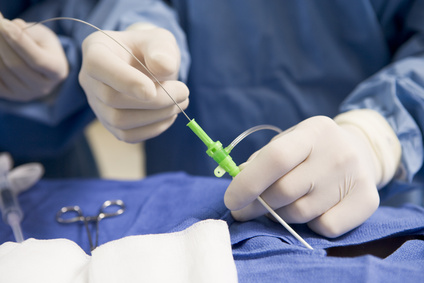
The objective of this meta-analysis was to compare the use of ultrasound in guiding TFA with the lack of it.
The primary endpoint (PE) was defined as a combination of major vascular complications (including pseudoaneurysms, arteriovenous fistulas, retroperitoneal bleeding, hematomas with a diameter greater than 5 cm, limb ischemia requiring intervention or surgery) or major BARC 3 or 5 bleeding. The secondary endpoint (SE) consisted of a combination of major vascular complications, major or minor bleeding, and major vascular complications exclusively.
The analysis included 2441 patients, 1208 of whom were randomly assigned to the ultrasound-guided access group and 1233 to the group that did not use ultrasound. The average patient age was 65.5 years, and most subjects were men. Additionally, 12% of the patients had peripheral vascular disease, and 34% had undergone percutaneous coronary intervention with stent placement. Approximately 80% of the procedures were performed with 6-Fr catheters and, in half of the cases, operators used a percutaneous closure device.
Read also: Cardiac Angiography: Necessary for CABG Patient Diagnosis?
As for the results, there was a lower incidence of major vascular complications or major bleeding in the ultrasound-guided group compared with the group without ultrasound (2.8% vs. 4.5%; odds ratio [OR] 0.61, 95% confidence interval [CI]: 0.39-0.94; p=0.026). In the subgroup of patients who received closure devices, those assigned to the ultrasound-guided group experienced a reduction in major bleeding or major vascular complications (2.1% vs. 5.6%, OR 0.36, 95% CI: 0.19-0.69), while there were no significant benefits in the subgroup without closure devices (4.1% vs. 3.3%; OR 1.21, 95% CI: 0.65-2.26).
Conclusion
In summary, this meta-analysis demonstrates that the use of ultrasound to guide transfemoral access is associated with a lower risk of major bleeding and major vascular complications in coronary procedures. Furthermore, ultrasound guidance can be particularly beneficial in preventing vascular complications in patients receiving closure devices. Therefore, routine use of ultrasound for femoral access should be considered.

Dr. Andrés Rodríguez.
Member of the Editorial Board of SOLACI.org.
Original Title: Ultrasound guidance for transfemoral access in coronary procedures: an individual participant-level data meta-analysis from the femoral ultrasound trialist collaboration.
Reference: Marc-André d’Entremont, MD, MPH et al EuroIntervention 2023;19-online publish-ahead-of-print October 2023.
Subscribe to our weekly newsletter
Get the latest scientific articles on interventional cardiology



