






Chronic total occlusions (CTO) represent a significant challenge in the current clinical practice, seeing as CTO percutaneous coronary intervention (PCI) is complex and involves a slightly higher rate of complications vs. non-CTO PCI.
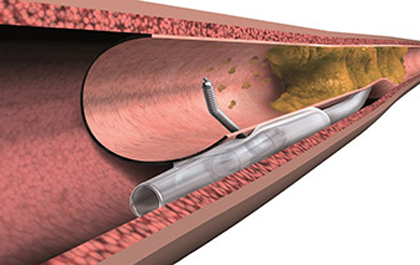
Revascularization impact on left ventricular ejection fraction (LVEF) varies across studies. For instance, the EXPLORE and REVASC trials did not find improved LVEF, LV end-diastolic volume, or segmental wall thickening. However, other studies and meta-analyses have reported certain improvement, especially in patients with prior ventricular function deterioration.
One study done on 142 CTO patients showed PCI was successful (SPCI) in 121 of them (85.2%).
The groups had similar baseline characteristics, though patients with failed PCI (FPCI) were older (64.6 vs. 69.7 years, p=0.008) and presented longer fluoroscopy time (55.7 vs. 37.7 minutes, p<0.001).
Women represented one third of the population. There were no significant differences in prevalence of hypertension (97%), diabetes (51%), prior PCI (62%), prior myocardial revascularization surgery (21%), stroke (24%), atrial fibrillation (29%), COPD (11%), kidney dysfunction (47%) or need for dialysis (10%). Mean initial LVEF was 49%, with 37% of patients presenting ≤50% and 23% with ≤30%.
Read also: TAVR and Surgical Bailout: Temporal Trends and Clinical Implications.
The right coronary was the most affected artery (50%), followed by the anterior descending (31.7%) and the circumflex (18.3%).
Average J-CTO was 2: 0 in 9.2%, 1 in 19.7%, 2 in 43.7% and ≥3 in the rest of cases. Mean procedural time was 107 minutes, with 222 ml contrast volume.
Results at Followup
Median time from PCI to follow-up echocardiogram was 8.4 months; SPCI patients saw a significant increase in LVEF (48.2% to 51.8%, p<0.001), with 29% showing ≥10% improvement. On the contrary, in patients with FPCI, there was no LVEF increase or deterioration.
Read also: Timing in Complete Revascularization in Acute Coronary Syndrome: BIOVASC 2-Year Followup.
Among patients with <50% baseline LVEF (n=50) and SPCI, there was significant improvement (32.6% to 40%, p<0.001), and 24 of these patients saw a ≥10% increase. Even though there was an non-significant improvement in functional class according to the Canadian Cardiovascular Society, there were no changes according to New York Heart Association.
The general population did not see target vessel related changes in LVEF with SPCI. However, patients with <50% LVEF saw notable target vessel related improvement:
- Anterior Descending: 9.4%.
- Circumflex: 6.3%.
- Right Coronary: 7.3%.
At multivariable analysis, SPCI was a significant predictor of improved LVEF (≥10%) in patients with baseline ventricular function deterioration. However, CTO localization was not a relevant predictor of improved LVEF.
Conclusion
Successful CTO- PCI is associated with modest improvement of left ventricular ejection fraction, more pronounced in patients with reduced baseline LVEF.
Original Title: Assessment of Left Ventricular Function After Percutaneous Coronary Intervention for Chronic Total Occlusion.
Reference: Yasser M. Sammour, et, al. Journal of the Society for Cardiovascular Angiography & Interventions 4 (2025) 102460 https://doi.org/10.1016/j.jscai.2024.102460.
Subscribe to our weekly newsletter
Get the latest scientific articles on interventional cardiology



 representan un desafío significativo en la práctica clínica actual, ya que su abordaje mediante angioplastia coronaria (ATC) es complejo y conlleva una tasa ligeramente superior de complicaciones en comparación con las lesiones no CTO.)