






Courtesy of Dr. Juan Manuel Pérez.
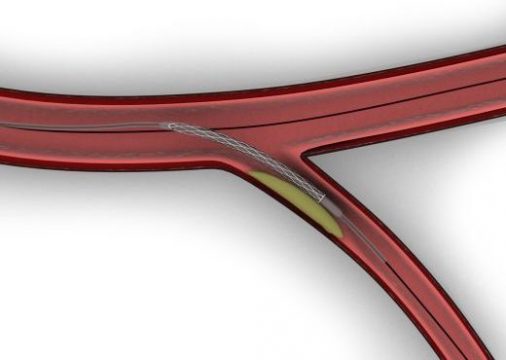
Bifurcation lesions account for up to 20% of all coronary angioplasties. The most commonly used strategy is provisional stenting of the main vessel, with optional side branch treatment. Given the ongoing debate over the optimal management of a compromised side branch, this meta-analysis compared the clinical efficacy of drug-eluting balloons (DEBs) versus non-coated balloons (NCBs) in these cases.
Researchers included five studies (two randomized clinical trials and three observational studies), with a total of 1762 patients. The average population age ranged between 60 and 70 years, with a predominance of men (73–83%). Most patients presented with acute coronary syndrome (56–91%) and between 4% and 28% experienced chronic coronary syndrome. The lesions were mostly true bifurcations (Medina 1,1,1), predominantly located in the left anterior descending artery and the circumflex artery. The treated side branches had diameters between 2.0 and 2.5 mm, and the drug-eluting balloons used were mainly coated with paclitaxel.
The pooled analysis showed that the use of DEBs was associated with a reduction of almost 50% in the likelihood of experiencing a major adverse cardiovascular event (MACE) (odds ratio [OR] 0.48; p <0.0001), as well as a 61-% reduction in the rate of acute myocardial infarction (AMI) (OR 0.39; p <0.001).
Read also: Decompensated Aortic Stenosis: Time to TAVR Matters.
Regarding the need for repeat intervention, the use of DEBs was associated with a 38-% reduction in the likelihood of requiring a new side branch revascularization (target lesion revascularization, TLR) and a 74-% reduction in target vessel revascularization (TVR, which includes both the main vessel and the side branch). However, while there was a favorable trend with DEB use, none of these differences reached statistical significance.
Conclusion
In bifurcation lesions treated with provisional stenting, the use of DEBs in the side branch is associated with a significant reduction in MACE and AMI compared to the use of conventional balloon. While there were no statistically significant differences in reintervention rates (TLR or TVR), there was an obvious trend towards DEB use. These results support its use as an effective alternative to conventional balloons, particularly in single-stent strategies.
Reference: Rocchetti M., Tua L., Cereda A., Conconi B., Franchina AG, Carlà M., Spangaro A., Lucreziotti S. Cardiovascular Catheter Interv. 2025;1–10. doi:10.1002/ccd.3157.
Subscribe to our weekly newsletter
Get the latest scientific articles on interventional cardiology



