The SOLACI Educational Newsletter has a new director! It is Dr. Gustavo Pedernera, a prestigious clinical and interventional cardiologist, specialized in endovascular treatments at the Buenos Aires Cardiovascular Institute (Instituto Cardiovascular de Buenos Aires, ICBA), Argentina.
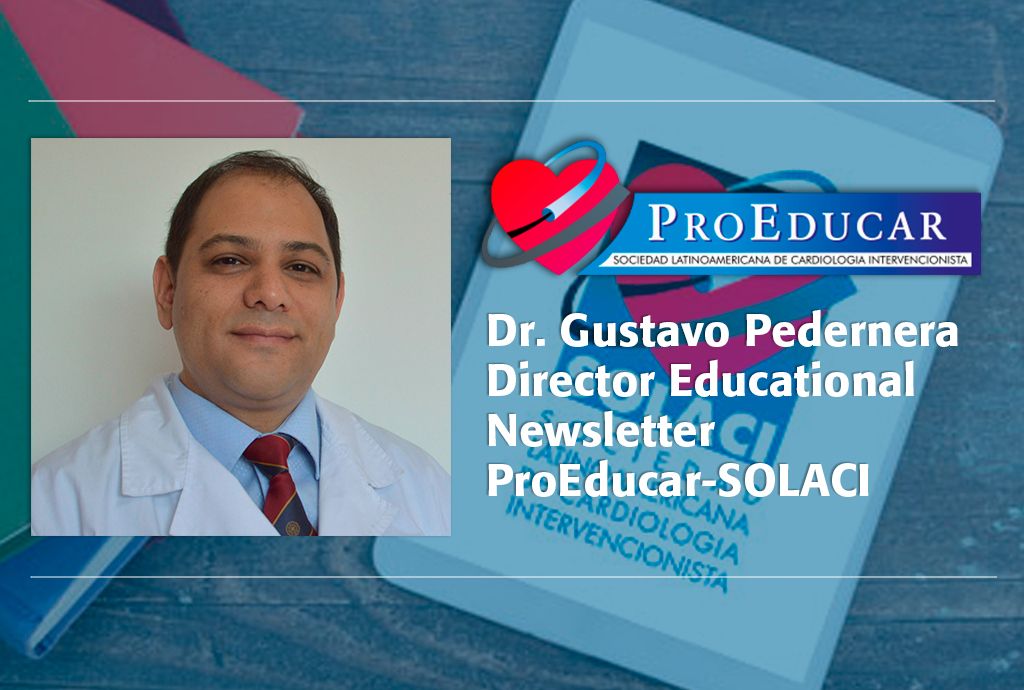
Dr. Pedernera directed the Educational Newsletter #113 (dedicated to the treatment of chronic total occlusion) and was kind enough to talk to solaci.org about his appointment, his objectives as Director of the Educational Newsletter, and the importance of a SOLACI continuing training program through ProEducar.
– What is your approach for this new challenge? What does it mean to you?
Having the trust of previous directors and SOLACI members, who have bestowed upon me the responsibility to direct the ProEducar Newsletter, is a great honor. I have taken part in different SOLACI activities and this is a significant challenge. Continuing medical training is one of the fields we should strive the most to emphasize and develop.
– What are your objectives as the new Director of the ProEducar Educational Newsletter? What are your expectations?
Our main aim is to unify and level out the knowledge of all young interventional cardiologists and trainees in our specialty. We will do so through better access to information and more communication of knowledge. The joint efforts of our referents, in coordination with society, will undoubtedly strengthen us as a region, allowing us to strive for even higher achievements.
– Tell us more about SOLACI’s Educational Newsletter. What is appealing and advantageous about it?
The Educational Newsletter is essential for training physicians, since it features theoretical, statistical, and technical contributions from experts in different areas. The Newsletter has stopped being an informational addendum, becoming an extremely valuable supplemental source of study material. As an advantage, it includes step-by-step explanations for different techniques or procedures, with educational images, charts, and videos, as well as interviews with experts, turning it into an enriching and appealing resource.
– In your opinion, is it important for SOLACI to promote educational opportunities for fellows in Latin America? Why?
SOLACI must undoubtedly promote educational opportunities for young trainees. In that sense, we must share all information and technical and procedural aspects with all Latin American members, without restrictions. This will allow us to potentially count with materials and devices still missing in different countries; to generate research projects; to expand the opportunities for scientific exchange, so as to increase our expertise and strengthen regional ties in order to participate more in congresses and academic activities all over the world.
Subscribe to our weekly newsletter
Get the latest scientific articles on interventional cardiology
We are interested in your opinion. Please, leave your comments, thoughts, questions, etc., below. They will be most welcome.