






Approximately 20% of all percutaneous coronary interventions (PCI) are performed on bifurcation lesions, which continue to pose a challenge in terms of strategy: how many stents to use, what is the most suitable strategy, and when to transition from a single stent to two during the procedure. Additionally, the use of two stents in these lesions is known to be associated with a higher rate of restenosis and an increased risk of adverse events.
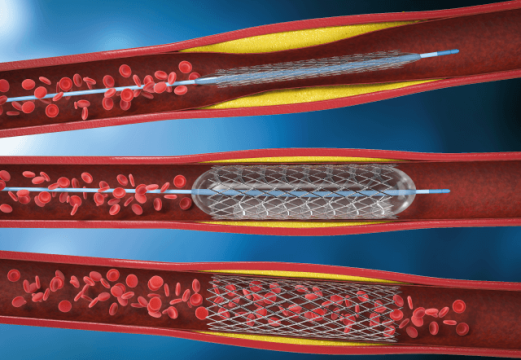
The evolution of these cases in a complex gender context has not been extensively analyzed, and it is often found that the number of women included in studies is limited.
In this regard, researchers conducted an analysis of the e-Ultimaster Study, which included a total of 37,198 patients. For this analysis, 4006 patients were selected, of whom 946 were women and 3,064 were men. All of them had bifurcation lesions, whether true (Medina classification 0.1.1, 1.0.1, and 1.1.1) or non-true (classified as Medina 0.0.1, 0.1.0, and 1.0.0). In all cases, the Ultimaster stent was used.
The primary endpoint (PEP) was defined as cardiac death, myocardial infarction in the treated vessel, and revascularization of the treated vessel guided by clinical criteria at 12 months.
Among the population, women had an older average age (69 years versus 64 years; p <0.0001) and a higher prevalence of hypertension and dyslipidemia, but a lower incidence of prior heart attack, percutaneous transluminal coronary angioplasty, and myocardial revascularization surgery. Diabetes had a similar prevalence in both groups.
Read also: MITRAL Trial, Results at 5 Years.
In the group of women, fewer lesions were treated, and fewer stents were implanted, especially in the bifurcations of the circumflex artery. There were no significant differences in the Medina classification of lesions or in the decision to use one or two stents. The most frequently used techniques for the implantation of two stents were T-stent, followed by TAP, Culotte, Crush stent, Kissing stent, and V-stent. While the use of the kissing technique was similar in both groups, women more often received partial occlusion balloon treatment (POT).
At the one-year follow-up, the PEP was similar in women and men (5.3% versus 4.7%, relative risk [RR], 1.12 [95% confidence interval (CI), 0.81−1.54], p = 0.50). There were no significant differences in terms of cardiac death, myocardial infarction in the treated vessel, and revascularization of the treated vessel guided by clinical criteria. Furthermore, after propensity score adjustment, there were no differences in the PEP (5.5% vs. 5.2%, RR, 1.05 [95% CI, 0.77−1.44], p = 0.75) or other adverse events.
Conclusion
In summary, in this contemporary study based on “real-world” data on PCI in bifurcation lesions, no significant differences were found in the stent implantation strategy between men and women, and one-year outcomes were similar in both groups.

Dr. Carlos Fava.
Member of the Editorial Board of SOLACI.org.
Original Title: Sex‐based treatment and outcomes for coronary bifurcation stenting: A report from the e‐ULTIMASTER registry.
Reference: Gemina Doolub, et al. Catheter Cardiovasc Interv. 2023;102:430–439.
Subscribe to our weekly newsletter
Get the latest scientific articles on interventional cardiology



