Modelos europeos de telemedicina, como el servicio finlandés Medilux, permiten realizar consultas médicas online mediante un cuestionario clínico, sin acudir a una consulta presencial.

SOL SOLACI Continues to Grow

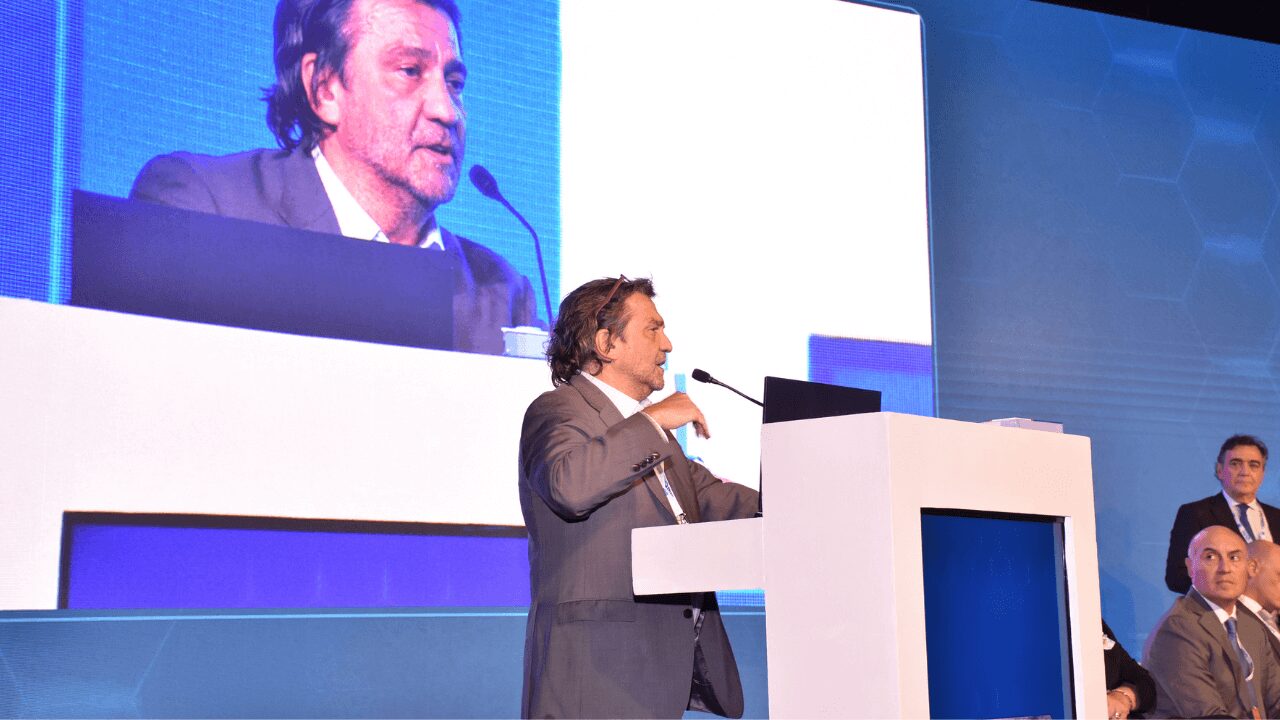
The SOLidario SOLACI Program took on five new cases that needed our solidarity and presented them at SOLACI-CACI 2024. SOLACI’s social responsibility program is constantly at work, and on this occasion, its Director, Dr. Marcelo Halac (ARG), presented at SOLACI-CACI 2024 Congress the outcomes of five new procedures conducted as charity work. The total number of cases taken by the Program across Latin America since its official creation in 2014 is now 92.
Four coronary procedures were performed at the Corrientes Institute of Cardiology. These patients had been waiting a long time for their intervention. Additionally, an extracardiac intervention (for carotid artery disease) was also successfully conducted using a filter and a self-expanding stent.

The official presentation took place at the SOLACI-CACI 2024 Congress Opening Ceremony in the Main Arena Hall of the Buenos Aires Hilton Hotel Convention Center. Afterward, Dr. Halac spoke with solaci.org and praised the evolution of the SOLidario Program over time: “We are very satisfied with the outcome of the cases undertaken; with time, SOL SOLACI has gained cumulative experience. Over the past 10 years, we have managed to build an increasingly solid organizational culture that sparks interest from new stakeholders who want to connect or associate with this initiative.”

It is worth remembering that the mission of SOL Solidario is to reach people who do not have any medical coverage, with the aim of performing percutaneous procedures, thereby reducing the impact of cardiovascular disease in vulnerable populations. In this regard, Dr. Halac reminded us that “of the 60 million deaths that take place globally every year, approximately 75% (that is, 3 out of 4 people) are due to a cardiovascular issue (…). That is why it is important to reach an increasingly large portion of the population.”

If you want to join the SOL SOLACI Program, please write to us at jornadas@solaci.org


Subscribe to our weekly newsletter

Get the latest scientific articles on interventional cardiology

Más artículos de este Autor

Everything You Need to Know About Panama Sessions 2026

After 7 years, SOLACI returns to Panama to host its 54th Regional Sessions, in collaboration with the Panamanian Association of Hemodynamics and Interventional Cardiology...

Call For Science SOLACI & SBHCI 2026 – Submit Your Work!

We invite you to submit scientific papers and challenging clinical cases for the SOLACI & SBHCI 2026 Congress, taking place from July 29 to...

FAC Webinar | CTEPH: one disease, three strategies, one team,

The Latin American Society of Interventional Cardiology (SOLACI) invites you to participate in the upcoming webinar organized by the Heart Failure Committee of the...

Mourning the passing of Dr. Eugene Braunwald

From the Latin American Society of Interventional Cardiology (SOLACI), we deeply regret the passing of Dr. Eugene Braunwald, a central figure in the development...

LEAVE A REPLY

Please enter your comment!
Please enter your name here

Artículos relacionados

Jornadas Panamá 2026
Jornadas SOLACIspot_img

Artículos recientes

KISS Trial: provisional stenting in non-left main coronary bifurcations — is less more?

Coronary bifurcation angioplasty remains one of the most frequent and technically challenging scenarios in interventional cardiology. Between 15% and 20% of coronary procedures involve...

Complex radial access: a four-step protocol to overcome loops and tortuosity

Radial access is currently the preferred strategy for coronary angiography and percutaneous coronary interventions due to its lower rates of bleeding and vascular complications...

Percutaneous closure of paravalvular leaks in high-risk patients: clinical outcomes and the impact of residual leak

Paravalvular leak (PVL) is a relatively frequent complication following valve replacement (overall incidence 5–18%; 2–10% in the aortic position and 7–17% in the mitral...