






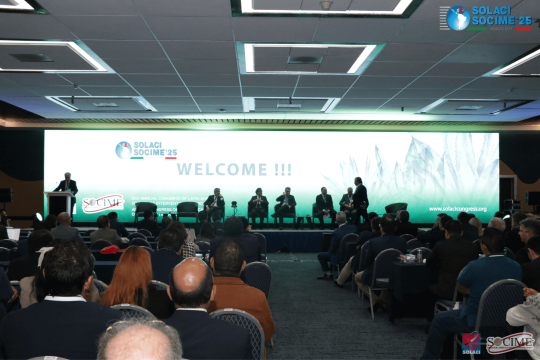
With great enthusiasm and the presence of prominent authorities in the cardiovascular field, the SOLACI-SOCIME 2025 Congress was officially inaugurated following the opening ceremony held on the afternoon of the event’s first day. This event marked the beginning of a week full of innovation, science, and continuing education for interventional cardiology professionals in Latin America and around the world.
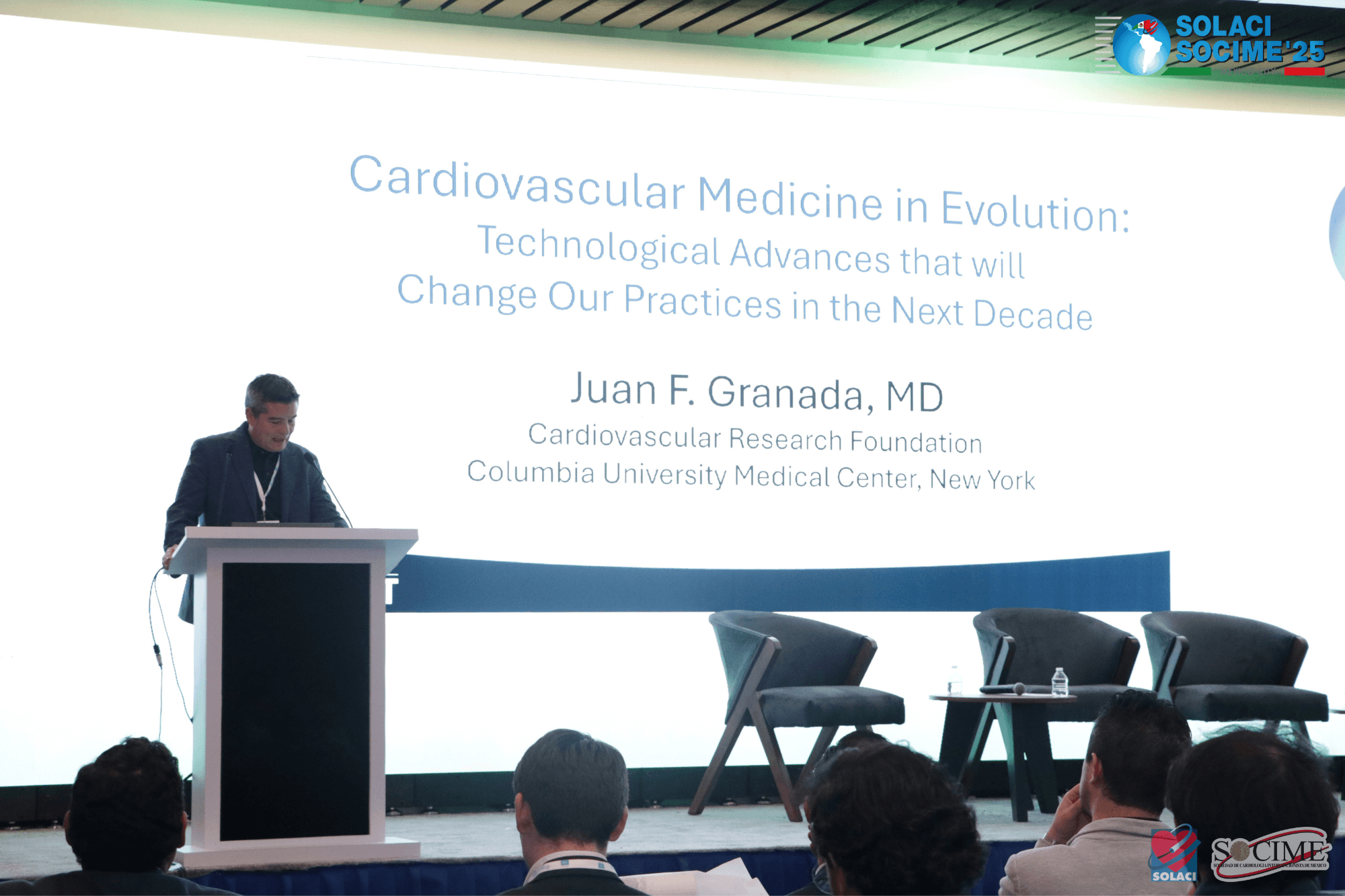
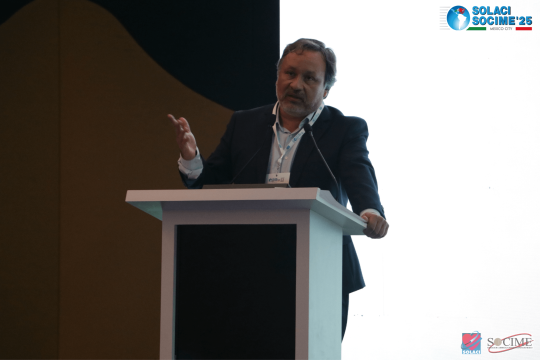
The ceremony began with the keynote lecture titled “Cardiovascular Medicine in Evolution: Innovation Trends That Shape the Future of Our Field”, delivered by Dr. Juan Granada, a renowned U.S. specialist. In his presentation, Dr. Granada highlighted the technological and scientific advances that are transforming the approach to cardiovascular diseases, emphasizing the importance of ongoing research and the adoption of new techniques to improve patients’ quality of life.
The formal opening of the Congress followed, with the presentation of the presidium composed of the top authorities of SOLACI, SOCIME, and other collaborating institutions from the region. Among those present were SOLACI President Dr. Mario Araya (CHL), Congress President Dr. Guering Eid Lidl (MEX), Scientific Committee President Dr. Jorge Cortés (MEX), SOLACI Vice President Dr. Ricardo Costa (BRA), SOLACI Treasurer Dr. Omar Santaera, American College of Cardiology President Dr. José Luis Leiva Pons, and Dr. Alejandro Téllez Schmill, representing the Mexican Ministry of Health.
In their speeches, the authorities emphasized the significance of the meeting as a key space for professional development and for strengthening collaborative work in interventional cardiology across Latin America.
Dr. Mario Araya expressed his gratitude for the warm welcome and highlighted both the consistent growth of SOCIME in recent years and the virtuous process the Latin American Society of Interventional Cardiology is undergoing. “SOLACI’s mission is to reach every corner of Latin America and improve the quality of life for patients with cardiovascular diseases. It’s a complex task due to the region’s highly diverse realities, but it is our duty to try—because that is our role,” he affirmed.
Dr. Ricardo Costa, SOLACI Vice President and President-Elect, praised the scale and significance of the SOLACI-SOCIME 2025 Congress and took the opportunity to announce the upcoming SOLACI-SBHCI 2026 Congress, which will take place from July 29 to 31 in São Paulo, Brazil.
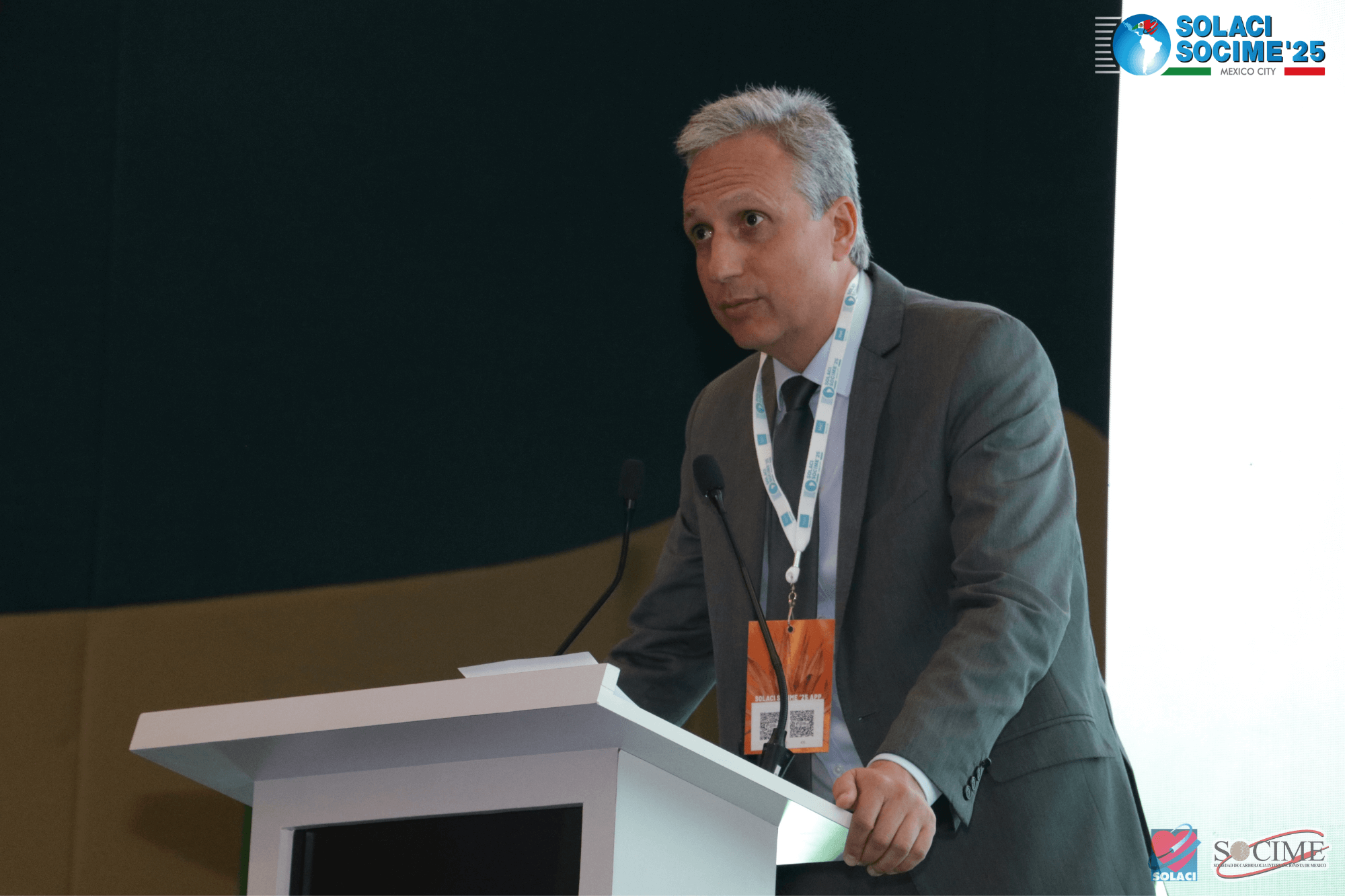
Next, Dr. Guering expressed his appreciation to attendees and industry partners for their commitment and collaboration in organizing a scientific event of such high caliber. “Today, August 6, is a very important day for interventional cardiology worldwide, and especially for our region, as the SOLACI Congress is underway,” he stated while reviewing the key scientific topics of the day.
Dr. Guering also underscored the inclusive and Latin American spirit of the event: “Let us be great, let us be generous, let us be Latin Americans.” He further stressed the importance of supporting the new generation of professionals as the only way to ensure the continued excellence of interventional cardiology in the region. “Fostering the creation of knowledge is essential. We must produce solid, impactful work. Our duty is to be generators of knowledge,” he emphasized.
As President of SOLACI-SOCIME 2025, he thanked both international and Latin American faculty for their unwavering support, as well as the industry for their active involvement. “This Congress was designed and structured with the highest sense of Latin American identity, with greatness and generosity. Thank you very much,” he concluded.
With this opening, SOLACI-SOCIME 2025 officially launched its activities, promising to be a key platform for scientific exchange and innovation in cardiovascular treatment throughout the region.


Subscribe to our weekly newsletter
Get the latest scientific articles on interventional cardiology



