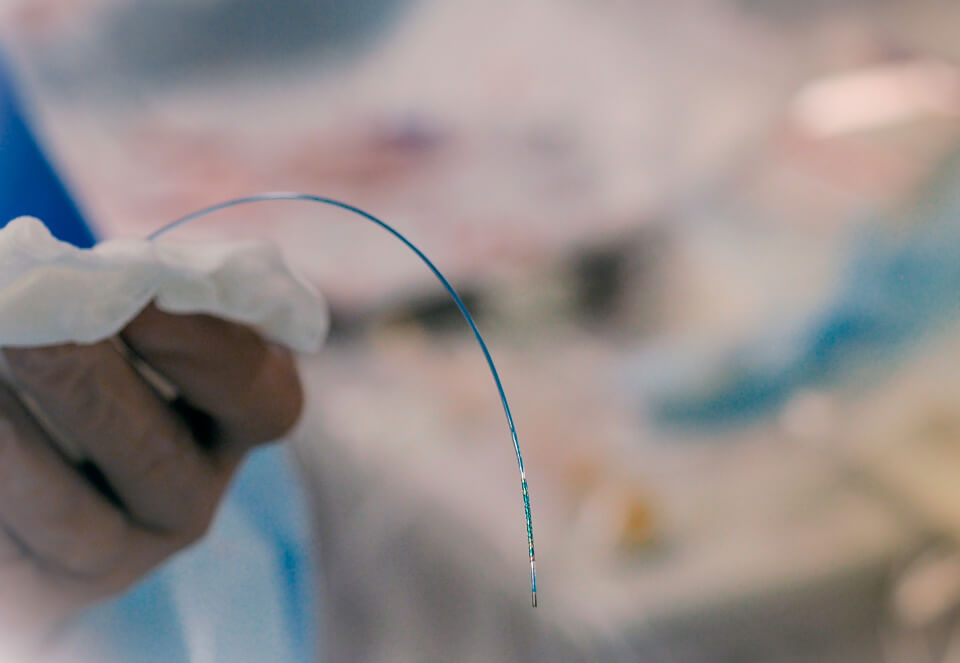
Percutaneous coronary intervention in long coronary lesions continues to represent a technical and clinical challenge, in which the use of conventional cylindrical stents may be associated with distal overexpansion, proximal underexpansion, edge dissections, and a greater need for stent overlap. The BioMime™ Morph stent is a cobalt-chromium sirolimus-eluting metallic stent with a biodegradable polymer and ultrathin 65 μm struts, featuring a progressive tapered design with a larger proximal diameter and a smaller distal diameter. It was developed to adapt to natural coronary anatomy and allow the treatment of extensive lesions using a single device.
The objective of the Morpheus Global Registry was to evaluate the long-term safety and clinical efficacy of this stent in long coronary lesions within a real-world clinical practice setting.
Study Characteristics
This was a prospective, multicenter registry that included 565 consecutive patients treated at 19 centers across 11 countries in Europe, Asia, the Middle East, and Africa. Native coronary lesions with lengths between 30 and ≤56 mm and reference diameters from 2.25 to 3.50 mm were included.
The mean age was 65.5 ± 10.4 years, with 76.5% men, and 31.2% of patients had diabetes. A nearly one-stent-per-patient ratio was used. The mean lesion length was 47.9 ± 9.4 mm, and 65% required stents of 50 or 60 mm in length. Most lesions were de novo (93.9%) with high angiographic complexity, with 65.6% classified as type C according to the ACC/AHA and 16.5% chronic total occlusions.
The most frequently treated vessels were the left anterior descending artery (49.9%) and the right coronary artery (37.7%), followed by the circumflex artery (11.4%), while left main coronary artery implantation was rare (0.3%). The registry included both elective procedures and acute clinical scenarios, with 17% of patients treated in the setting of ST-elevation myocardial infarction and 18% with non–ST-elevation myocardial infarction. Dual antiplatelet therapy was prescribed for a minimum of 12 months.
The primary endpoint was freedom from target lesion failure, defined as a composite of cardiac death, target vessel myocardial infarction, or target lesion revascularization, assessed at 6 months and up to 36 months of follow-up. Secondary endpoints included major adverse cardiovascular events, target vessel failure, stent thrombosis, and procedural success.
BioMime™ Morph shows high safety and low TLF rates in long and complex coronary lesions
Procedural and device success was 100%, with no in-hospital deaths, and restoration of TIMI 3 flow was achieved in more than 98% of patients. Freedom from target lesion failure was 97.9% at 6 months, 97.3% at 12 months, 96.3% at 24 months, and 95.2% at 36 months.
The cumulative incidence of major adverse cardiovascular events was 2.7% at 12 months, 3.7% at 24 months, and 4.9% at 36 months. Ischemia-driven target lesion revascularization occurred in 2.0%, 2.2%, and 3.9% at 12, 24, and 36 months, respectively. Stent thrombosis was infrequent, with only two reported events (0.97%) at 36 months, without a significant increase over follow-up.
In subgroup analyses, patients treated with 60 mm stents had more complex lesions, with a higher proportion of chronic total occlusions and preprocedural TIMI 0 flow. Nevertheless, freedom from target lesion failure at 36 months remained high (95.8%), with major adverse cardiovascular event rates comparable to those observed in patients treated with 50 mm stents.
Conclusion: the long tapered BioMime™ Morph stent improves PCI outcomes in extensive coronary lesions with sustained three-year results
In conclusion, the Morpheus Global Registry demonstrates that the BioMime™ Morph stent is a safe and effective option for the treatment of long and complex coronary lesions, with high procedural success rates, low need for reintervention, and a very low incidence of stent thrombosis. Favorable clinical outcomes sustained up to three years support the use of long tapered stents as a valid strategy to optimize percutaneous coronary intervention in complex coronary anatomies.
Título Original: Clinical outcomes of the BioMime™ Morph coronary stent system for long coronary lesions: three-year follow-up of the Morpheus Global Registry.
Referencia: Pierfrancesco Agostoni, MD; Jan-Peter Van Kuijk, MD; Paul Knaapen, MD; et al. Cardiovascular Revascularization Medicine, Volumen 81, páginas 39–47, 2025.
Suscríbase a nuestro newsletter semanal
Reciba resúmenes con los últimos artículos científicos