






The coexistence of coronary artery disease (CAD) in patients with severe aortic stenosis undergoing TAVI is common, with a reported prevalence ranging from 30% to 75%. Its optimal management remains controversial, as the evidence supporting systematic pre-procedural revascularization is limited and derives from studies with discordant results. In this context, the present study aimed to evaluate whether PCI prior to TAVI is associated with clinical benefit in patients with significant CAD in a real-world practice setting.
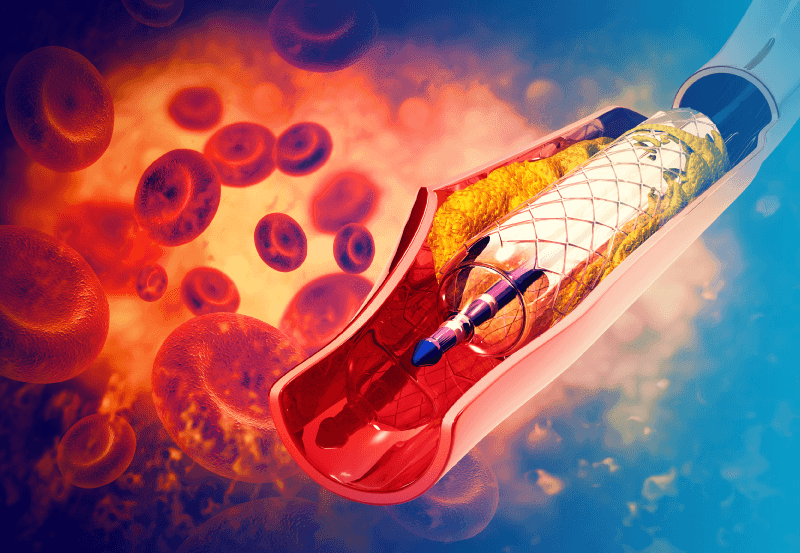
An observational study was conducted based on Swedish national registries (SWENTRY, SCAAR, SWEDEHEART), including 2,578 patients who underwent TAVI between 2008 and 2023 with significant CAD (≥50% angiographic stenosis or functionally relevant lesions). Coronary disease involved one, two, or three vessels (with a higher proportion of multivessel disease in the PCI group), with both proximal and distal lesions. PCI was performed predominantly in major epicardial vessels (mainly LAD, LCx, and RCA), with drug-eluting stents implanted in 92% of cases and complete revascularization achieved in 76%. Of the total cohort, 1,182 patients (45.8%) underwent prior PCI and 1,396 (54.2%) received conservative management. The mean age was 81.7±6.3 years, 61.4% were male, and the median follow-up was 2.7 years (IQR 1.3–4.6).
The primary endpoint was a composite of all-cause mortality, myocardial infarction (MI), and urgent revascularization. Secondary endpoints included the individual components of the primary endpoint, cardiovascular mortality, any revascularization, stroke, and bleeding.
Prior PCI before TAVI does not reduce mortality or myocardial infarction in patients with significant CAD
During follow-up, 1,119 events (43%) of the composite endpoint were recorded: 1,048 deaths (41%) (a considerable mortality rate for approximately 2 years of follow-up), 133 MIs (5.2%), and 75 urgent revascularizations (2.9%). The incidence of the composite endpoint was 45% in the PCI group and 42% in the conservative group, with no significant differences in the adjusted analysis (HR 0.98; 95% CI 0.85–1.14; p=0.80). No differences were observed in all-cause mortality, urgent revascularization, cardiovascular mortality, or stroke.
Read also: Rotational atherectomy and its technical secrets: use of floppy or ES guidewire.
However, PCI was associated with a reduction in the risk of any revascularization during follow-up (HR 0.46; 95% CI 0.30–0.72; p<0.001), representing a relative reduction of 54%. Conversely, a significant increase in bleeding risk was observed, with an incidence of 17% in the PCI group versus 12% in the conservative group (OR 1.59; 95% CI 1.23–2.04; p<0.001).
Conclusion: Fewer repeat revascularizations but higher bleeding risk: the clinical trade-off of PCI before TAVI
In this cohort of patients with significant CAD undergoing TAVI, performing PCI beforehand was not associated with a reduction in mortality, myocardial infarction, or urgent revascularization. However, it did reduce the need for subsequent revascularization at the cost of a significant increase in bleeding risk. These findings support an individualized strategy based on CAD severity, bleeding risk, and coronary access after TAVI.
Subscribe to our weekly newsletter
Get the latest scientific articles on interventional cardiology


 en pacientes con estenosis aórtica severa candidatos a TAVI es frecuente, con una prevalencia reportada entre 30% y 75%.)