






Courtesy of Dr. Carlos Fava.
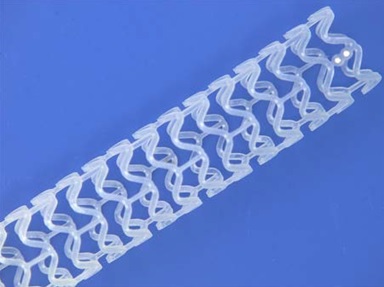 One of the questions around drug-eluting stents (DES) is whether the development of biodegradable polymers would derive in better outcomes than the performance of durable polymers as regards the presence of events. In consequence, the COMPARE II trial was carried out with the aim of testing them in “real-world” patients.
This was a randomized study comparing biodegradable-polymer biolimus-eluting stents (BP-BES) (Norobi, Terumo, Tokyo, Japan) and durable-polymer everolimus-eluting stents (DP-EES) (Xience V or Prime, Abbot Vascular, Santa Clara, California, or Primus, Boston Scientific, Natick, Massachusetts).
The study randomized 2707 patients. Among these, 1795 received biodegradable-polymer stents (66.3%) and 912 received durable-polymer stents (33.7%). No significant differences were observed between these populations.
Information on the 5-year follow-up was available for 98% of all patients. The rates of major adverse cardiac events (MACE) were similar (BP-BES, 17.3%, vs. DP-EES, 15.6%; relative risk: 1.11 [95% confidence interval: 0.92 to 1.33; p = 0.26]). No differences were observed either as regards the safety and efficacy endpoints: stent thrombosis (1.5% vs. 0.9%, p = 0.17) and target-lesion revascularization (10.6% vs. 9%; p = 0.18). The rates for the composite of cardiac death and acute myocardial infarction were 15% vs. 14.8%, p = 0.9.
Conclusion
The comparison of both stent types (BP-BES and DP-EES) after a 5-year follow-up confirms initial and medium-term results on the safety and efficacy of angioplasty in the “real world.” Actually, both alternatives offer similar outcomes.
Editorial Comment
This is the first analysis comparing second-generation DES with currently available polymers, and it shows that BP-BES offer the same safety and efficacy at 5 years as DP-EES.
While there was a numeric difference related to lower rates of cardiac death, acute myocardial infarction, and target-lesion revascularization with durable-polymer DES, such a difference was not statistically significant.
While various analysis showed some difference in favor of durable-polymer DES, populations were not uniform, a fact that renders this an open discussion. Further research on this matter is required.
Courtesy of Dr. Carlos Fava.
Original title: Biodegradable Polymer Biolumus-Eluting Stents Versus Durable Polymer Everolimus-Eluting Stents in Patients with Coronary Artery Disease. Final 5-Years Report From COMPARE II Trial (Abluminal Biodegradable Polymer Biolimus-Eluting Stent Versus Durable Polymer Everolimus-Eluting Stent).
Reference: Georgios J. Vlachojannis, et al. J Am Coll Cardiol Intv 2017 (article in press).
Get the latest scientific articles on interventional cardiologySubscribe to our weekly newsletter
We are interested in your opinion. Please, leave your comments, thoughts, questions, etc., below. They will be most welcome.



