






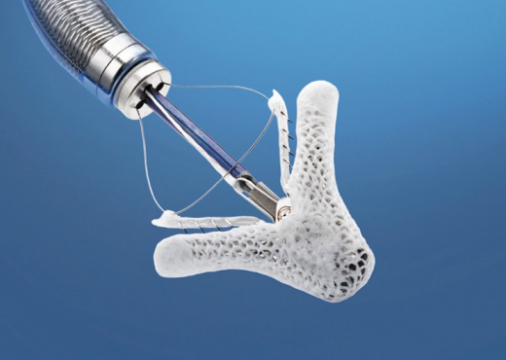
In September 2008, interventional physicians at the Heart and Vascular Centre Hamburg conducted the first MitraClip implantation after its Conformité Européenne (CE)-marking approval. In July 2019, the same site reached an amazing milestone, 1000 MitraClips implanted, and in doing so it became the most experienced site in the world.
Those 1000 patients treated had an average logistic EuroSCORE of 26.8%, a high proportion of relevant cardiac diseases (atrial fibrillation 67.1%; ischaemic cardiomyopathy 39.9%, and dilatative cardiomyopathy 20.1%) and a high proportion of other diseases (chronic kidney disease 51.5%; prior stroke 13.3%; pulmonary hypertension 25.6%; chronic obstructive pulmonary disease 20%).
The mean procedural time was 160 minutes, and patients received 1.4 clips with a procedural success rate of 90.5% after being discharged at 11 days.
Survival rate in this elderly, high-risk cohort was 46.2% within a mean follow-up of 4.4 years.
Read also: Incidence and Prognosis of Heart Valve Embolization.
The reintervention rate was relatively low (8.7%), and most of those patients were treated by a second MitraClip procedure.
These findings are similar to those from the German Transcatheter Mitral Valve Interventions Registry. The rate of patients treated for secondary mitral regurgitation has not changed significantly over the years.
A total of 6 interventional cardiologists conducted all these procedures, gaining exceptional experience.
Read also: Trying to Reduce Post TAVR Kidney Injury.
The indication for a MitraClip procedure was always based on an interdisciplinary team that included cardiovascular surgeons, clinical cardiologists, and, of course, interventional cardiologists.
Conclusions
The MitraClip system was the first edge-to-edge repair technique approved; implantation numbers have exceeded 80,000 cases worldwide and are continuously increasing.
Its procedural safety and feasibility to treat both mitral regurgitation aetiologies have led to a Level of Recommendation IIb, Level of Evidence C in the European Society of Cardiology/European Association of Cardiothoracic Surgery (ESC/EACTS) guidelines.
The results of the MITRA-FR and the COAPT trial may eventually lead to a higher strength of recommendation.
While MitraClip may be of great help in the treatment of selected patients, optimal medical treatment and cardiac resynchronization therapy (where indicated) are mandatory in patients with secondary mitral regurgitation.
Read also: ESC 2019 | MITRA-FR: 2-Year Outcomes of One of the Largest Studies on MitraClip.
For many years, we have argued about secondary mitral regurgitation being the origin or the cause of heart failure. In that sense, the COAPT trial may be considered as a ‘proof of concept’ that the reduction of mitral regurgitation improves the prognosis.
Original Title: 1000 MitraClip procedures. Lessons learnt from the largest single-centre experience worldwide.
Reference: Kalbacher D et al. Eur Heart J. 2019 Oct 7;40(38):3137-3139.
Get the latest scientific articles on interventional cardiologySubscribe to our weekly newsletter
We are interested in your opinion. Please, leave your comments, thoughts, questions, etc., below. They will be most welcome.



