Artificially sweetened beverages (with different kinds of sweeteners) could be responsible for increased cerebrovascular risk and close to a 3-fold increase in dementia risk due to Alzheimer’s disease.
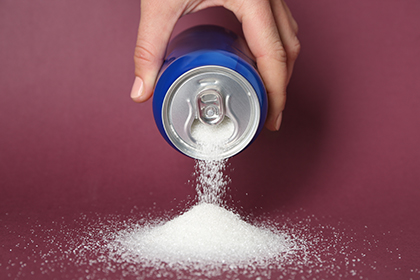
Both sweet and artificially sweetened drinks have been associated with cardiometabolic, cerebrovascular and dementia risk. This study prospectively evaluated sweet and sweetened beverage consumption in relation to the events above mentioned in the Framingham community.
2888 participants over 45 years old were studied to assess the incidence of stroke and 1484 participants over 60 were studied to assess the incidence of dementia.
Lea también: Bebidas azucaradas y con edulcorante asociadas a eventos cardiovasculares y mortalidad.
The number of drinks was measured using different specific questionnaires bearing in mind both recent and cumulative consumption in the 10-year follow-up.
After adjusting for age, sex, education (to analyze dementia) calory intake, diet quality, physical activity and tobacco consumption, it was observed that high recent consumption and high cumulative consumption both increased the risk of stroke, any dementia and Alzheimer’s disease.
When comparing to 0 consumption (as reference) the risk with sweetened beverages was nearly 3 times higher for stroke (HR 2.96 CI 95%, 1.26 to 6.97) and Alzheimer’s (HR 2.89 CI 95%, 1.18 to 7.07).
Beverages with natural sugar were not associated to stroke or dementia.
All this information is contradicting and there are other studies with literally opposite results. The problem is randomizing and, even though multiple adjustments are made, there might be variables out of control. On example could be that the populations at higher risk of events (obesity and diabetes) consume more artificially sweetened beverages and therefore beverages wouldn’t be the cause behind events, but the baseline risk of this population.
2020-01-14-pase2019Original Title: Sugar- and Artificially Sweetened Beverages and the Risks of Incident Stroke and Dementia. A Prospective Cohort Study.
Reference: Matthew P. Pase et al. Stroke. 2017;48:1139-1146.
Subscribe to our weekly newsletter
Get the latest scientific articles on interventional cardiology
We are interested in your opinion. Please, leave your comments, thoughts, questions, etc., below. They will be most welcome.