






Cath lab activation—and everything that entails—within 20 minutes was associated with the target of performing primary angioplasty in under 2 hours in at least 75% of patients.
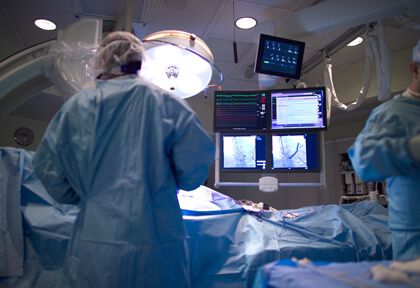
Historically, door-to-balloon time was measured, which provided a rough idea of where there could be flaws to fix. This is particularly true in the case of patients who need to be transferred to a higher-complexity facility where a primary angioplasty can be performed.
When these times are extended, interventional cardiologists claim that they were called in late, while clinical cardiologists state that the former arrived late at the hospital. This is a recurrent argument the following morning, when times and results are audited.
There might be multiple confounding factors in delays, so the novelty of this research is having measured the activation time, which provides an objective figure to improve practice.
Measuring cath lab activation time is new in the process of improving primary angioplasty in infarcted patients with ST-segment elevation myocardial infarction.
Read also: Is Medical Treatment Better at Lowering Bleeding-Caused Mortality than Angioplasty?
The aim of this work was to determine whether faster activation could mean faster reperfusion, especially in patients who need to be transferred. Having the procedure room ready when the patient is still in the ambulance does not make sense.
From 2015 to 2017, 2063 patients with ST-segment elevation myocardial infarction requiring inter-hospital transfer for primary angioplasty were treated in 12 vastly different geographical areas of the United States.
Patients were stratified according to cath lab activation time (time between arrival to the first facility and cath lab activation in the second center). Mean time was 26 minutes, with over 60% of the population at above 20 minutes.
Read also: Infarction, Stroke and Aortic Emergency Syndromes in the Shadow of the Pandemic.
Cath lab activation within 20 minutes meant faster transfers (40 vs. 68 minutes) and faster reperfusions (98 vs. 135 minutes).
The targeted reperfusion within 120 minutes stated in the guidelines could be met in 80.1% of the population with early activation vs. only 39% of patients when activation took over 20 minutes.
The authors of this paper (recently published in Circ. Cardiovasc. Qual. Outcomes) never imagined the arrival of the new coronavirus. The pandemic has interrupted reperfusion time auditing, and even scientific societies recommend to “tolerate delays” to conduct adequate epidemiological evaluations or even prescribe thrombolysis (unprecedented suggestions in unprecedented times).
Conclusion
Measuring cath lab activation time is a useful tool to significantly improve reperfusion time.
Original Title: Catheterization Laboratory Activation Time in Patients Transferred With ST-Segment– Elevation Myocardial Infarction. Insights From the Mission: Lifeline STEMI Accelerator-2 Project.
Reference: Michel Zeitouni et al. Circ Cardiovasc Qual Outcomes. 2020;13:e006204. DOI: 10.1161/CIRCOUTCOMES.119.006204.
Get the latest scientific articles on interventional cardiologySubscribe to our weekly newsletter
We are interested in your opinion. Please, leave your comments, thoughts, questions, etc., below. They will be most welcome.



