Left atrial appendage closure (LAAC) devices are a good alternative for the prevention of systemic thromboembolism in patients with non-valvular atrial fibrillation (AF) and high risk of bleeding or those with anticoagulation contraindication.
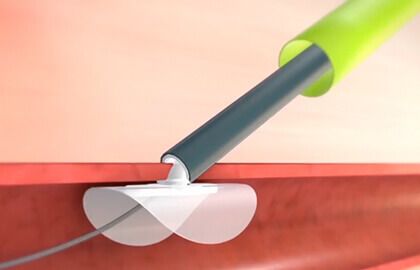
According to PRAGUE-17 outcomes, at 4 years, LAAC resulted non-inferior to direct anticoagulation in the prevention of cardiovascular, neurological, and bleeding events.
LAAC presents a few contraindications, such as the presence of left atrial appendage thrombi prior procedure. In these cases, the most frequent strategy is short parenteral anticoagulation for thrombus resolution and following device implantation.
However, in some circumstances, anticoagulants might cause bleeding events. In this regard, some studies have reported the feasibility of LAAC device implantation, despite the presence of thrombi. This have been dubbed “LAAC trapping devices” (TTP-LAAC).
To assess their safety, the TRAPEUR registry was carried out (Thrombus Traping Eureopean Registry). This retrospective multicenter registry including 13 European centers with high LAAC implantation volume, included patients with LACC indication (Amulet or Watchman FLX) with prior or concurrent thrombus presence (TTP-LAAC ad-hoc). Thrombi were stratified according to location (proximal or distal) and size (> or < 50% of atrial appendage surface). To minimize risk of embolism, the “no touch technique” by Jalal Z et al was used.
Read also: Safety of Acetylcholine in the Cath Lab.
Primary end point was a composite of cardiovascular mortality, stroke or transient ischemic attack, or peripheral embolization at 30 days. Secondary end points were device thromboembolism, cardiac tamponade, and major or minor bleeding.
Of 1918 patients receiving LAAC, 4% presented prior thrombi (77 patients). In 24 patients there was thrombus resolution with anticoagulation optimization, and outcomes of 53 TTP-LAAC patients were finally analyzed. A few patients presented proximal thromboembolism (n=3), thrombi measuring >50% (n=9).
AT 30 days, there was 2% incidence of primary end point (CI 95% 0-5.8%), 10% minor bleeding and 4% major bleeding.
Conclusions
TTP-LAAC was feasible, with few adverse events (2% cardiovascular and 4% bleeding). The study also showed a short anticoagulation strategy is also safe when it comes to reducing thrombus burden prior procedure. The study has the limitations of a registry, and few patients with thromboembolism at implantation. However, the safety of this procedure is promising and provides more opportunities to use LAAC devices.

Dr. Omar Tupayachi.
Member of the Editorial Board of SOLACI.org.
Original Title: Left atrial appendage closure for thrombus trapping: the international, multicentre TRAPEUR registry.
Reference: Sebag, Frederic A et al. “Left atrial appendage closure for thrombus trapping: the international, multicentre TRAPEUR registry.” EuroIntervention : journal of EuroPCR in collaboration with the Working Group on Interventional Cardiology of the European Society of Cardiology vol. 18,1 (2022): 50-57. doi:10.4244/EIJ-D-21-00713.
Subscribe to our weekly newsletter
Get the latest scientific articles on interventional cardiology