In the last few years, we have seen significant growth of chronic total occlusion (CTO) percutaneous intervention, which has also been considered for patients with viable territory that remain symptomatic. Experienced centers present successful CTO intervention rates close to 90%, especially with a hybrid approach. However, it is still a complex procedure, and target vessel failure rate (TVF) remains high.
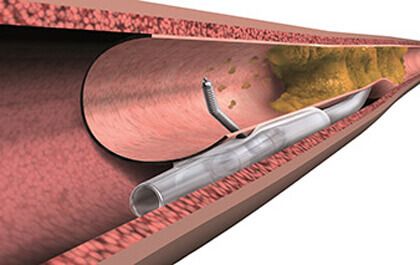
CTO Percutaneous intervention (PCI) can generate changes in coronary circulation that could be classified as: 1) effects on CTO vessel and dependent myocardium, 2) effects on donor vessels, and 3) effects on the interaction between these two (collateral circulation).
A small group of patients saw changes after CTO PCI: increased absolute blood flow (Q) and FFR in CTO vessel, with reduced myocardium resistance. Also, there was reduced collateral vessel flow, regressing over time, while when looking at donor artery, there was increased FFR with reduced flow and increased resistance (collateral loss).
The aim of this study, carried out in three European centers, was to look into changes in collateral flow after CTO PCI and identify whether there were associated to recanalization technique.
A prospective observational study was carried out of patients with viable compromised territory presenting angiographically visible collateral circulation. CTO techniques were wire escalation, and dissection and re-entry, both anterograde and retrograde. After successful PCI coronary physiology was measured through FFR, coronary wedge pressure (PW), and flow measurement with three FFR data (FFRmio=FFRcor+FFRcoll). Q was calculated with continuous coronary thermodilution.
Of 119 CTO PCI, 106 were successful (89% successful rate), 81 patients were included in the final cohort and followup at 3 months. Mean age was 64, 82% were men, J-CTO score was 2 and 22% presented EURO-CASTLE score >3. 64% received anterograde escalation, 8.6% dissection and re-entry and 27% retrograde.
PW saw 0.34±0.11 to 0.19±0.09 (p<0.01) reduction between post CTO PCI and followup data, also resting values reduced from 0.40±0.14 to 0.17±0.09 (p<0.01). Absolute difference between resting and hyperemia values gradually reduced at followup, which speaks of micro vessel recovery over time (0.17±0.09 vs 0.19±0.09), though not significant. Maximum collateral flow (Qcol) reduced from 55±32 ml/min post PCI to 38±24 ml/min (p<0.01). While CTO Q after PCI went from 210±87 ml/min to 255±99 ml/min at followup (p<0.01). Multivariable analyzis showed no difference in change associated to PCI strategy.
Conclusions
This study is the largest to analyze physiological changes in collateral circulation after CTO PCI, both in pressure and flow. There was a significant reduction of collateral flow between index procedure and 3-month followup values, regardless of technique.

Dr. Omar Tupayachi.
Member of the Editorial Board of SOLACI.org.
Original Title: Changes in coronary collateral function after successful chronic total occlusion percutaneous coronary intervention
Source: Keulards D, Alsanjari O, Keeble TR, Vlaar P-J, Kelly PA, Tang KH, et al. Changes in coronary collateral function after successful chronic total occlusion percutaneous coronary intervention [Internet]. Pcronline.com. [citado 13 de julio de 2022].
Subscribe to our weekly newsletter
Get the latest scientific articles on interventional cardiology