






The benefits of DES are well known, as well as the benefits of more recent polymer-based DES versions (even those with no polymers). However, strut size is no small matter, and might even make the difference, seeing as thinner struts are associated to better deliverability, simpler crossing profile in bifurcations, better endothelization and healing. Besides, it reduces vessel injury, inflammation, neointimal proliferation and thrombogenesis.
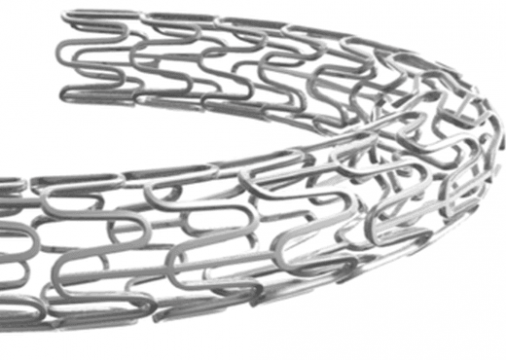
Even though the latter has already been established, the long-term benefits of ultra-thin struts have not yet been looked at.
The BIOFLOW V randomized 1334 patients. 884 (66.2%) received ultra-thin bioresorbable polymer sirolimus eluting stent ORSIRO (BP SES) and 450 patients received XIENCE durable polymer everolimus eluting stent (DP EES).
Primary end point was target lesion failure (TLF) defined as the composite of cardiac death, target vessel MI (TV MI) or ischemia driven target lesion revascularization (TLR).
The groups were similar. Neither were there differences in lesion length, vessel diameter or lesion characteristics.
Primary end point at 5 year was similar between the groups (12.3% BP SES and 15.3% for DP EES P=0.108).
Read also: Calcified Lesions: CTO Strategies for Plaque Preparation.
Patients receiving BP SES presented less TV MI (6.6% vs 10.3%, P= 0.015) and lesS ischemia driven TLR, though with no statistical significance (5.9% vs 7.7% P=0.2). The incidence of death was 2.6% vs. 1.9% (P=0.49).
The presence of late/ very late/ definite and probable thrombosis was 0.3% in the BP SES group and 1.6% in the DP ESS (P=0.02).
Conclusion
In this large, randomized study, TLF, death and TLR at 5 years were similar between those receiving BP SES vs DP EES. Target vessel failure and late/very late/definite and probable thrombosis was significantly lower with BP SES. These results confirmed durability and safety and efficacy of PCI with ultra-thin bioresorbable polymer sirolimus eluting stents.

Dr. Carlos Fava.
Member of the Editorial Board of SOLACI.org.
Original Title: Ultrathin Bioresorbable Polymer Sirolimus-Eluting Stents Versus Durable Polymer Everolimus-Eluting Stents BIOFLOW V Final 5-Year Outcomes
Reference: David E. Kandzari, et al. J Am Coll Cardiol Intv 2022;15:1852–1860.
Subscribe to our weekly newsletter
Get the latest scientific articles on interventional cardiology



