






Mitral regurgitation (MR) is the most common valvulopathy and full medical treatment at maximal tolerated doses has been shown quite effective to treat it. However, its limited in a group of patients that require valve intervention.
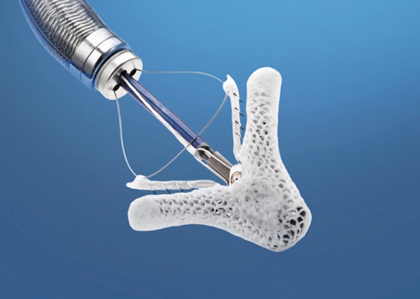
At present, the ideal treatment is surgical valve replacement, which is in many cases is not viable because of its high surgical risk. It is in this scenario where Edge-to-edge with MitraClip has been shown beneficial.
Currently, there is another device available, the PASCAL, but its safety and efficacy has not been yet analyzed against the MitraClip.
The CLASP IID is a randomized, multicenter, multinational, prospective study assessing the safety and efficacy of the PASCAL against MitraClip in patients with degenerative mitral regurgitation with prohibitive risk of surgery.
Safety end point was the composite of MAE at 30 days (cardiovascular death, MI, stroke, need for dialysis, major bleeding and surgical or percutaneous non-elective reintervention of the mitral valve) and effective end point was the presence of MI ≤2 + at 6 months.
It included 180 patients, 117 receiving PASCAL and 63 MitraClip.
Read also: Combined Calcified Lesion Preparation Strategy.
Mean age was 81, 66% were men, 85% had hypertension, 18% diabetes, and 58% atrial fibrillation.
75% of mitral regurgitation was grade 4+, effective orifice area was 0.50 cm2, ejection fraction 58%, diastolic volume 145, pulmonary artery systolic pressure 43 mmHg, TAPSE 20, atrial volume 120 ml and severe tricuspid failure 3%.
Primary safety end point at 30 days was similar (3.4% for PASCAL vs. 4.8% for MitraClip), showing non-inferiority between devices. There was no difference in mortality, stroke, MI, need for dialysis, major bleeding and non-elective mitral valve intervention.
Efficacy end point at 6 months also resulted similar, meeting non-inferiority criteria (96.5% for PASCAL vs. 96.8% for MitraClip).
Conclusion
the CLASP IID showed PASCAL system met non-inferiority primary end points expanding percutaneous treatment as a valid option for patients with symptomatic degenerative mitral valve regurgitation at prohibitive surgical risk.

Dr. Carlos Fava.
Member of the Editorial Board SOLACI.org.
Original Title: Randomized Comparison of Transcatheter Edge-to-Edge Repair for Degenerative Mitral Regurgitation in Prohibitive Surgical Risk Patients.
Reference: D. Scott Lim, M. J Am Coll Cardiol Intv 2022;15:2523–2536.
Subscribe to our weekly newsletter
Get the latest scientific articles on interventional cardiology



