






Recent studies have shown that drug-eluting stents with biodegradable polymer and ultrathin struts are safe and effective, including low rates of stent thrombosis.
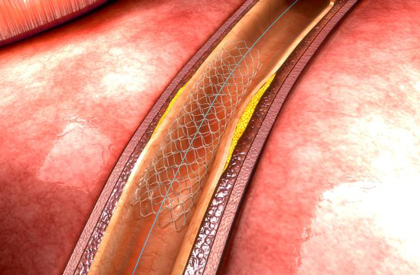
This is why researchers conducted the BIODEGRADE (Biomatrix and Orsiro Drug-Eluting Stents in Angiographic Result in Patients With Coronary Artery Disease) study, which showed the non-inferiority at 18 months of ultrathin biodegradable polymer stents (ORSIRO) vs. biolimus-eluting thick biodegradable polymer stents (BioMatrix).
The aim of this prospective, randomized, multicenter study was to evaluate the efficacy and safety results of BIODEGRADE after 3 years.
The primary endpoint (PEP) was treated-lesion failure (TLF), defined as cardiac death, treated-vessel related AMI, or ichemia-guided revascularization of the treated vessel at 3 years. The secondary endpoint (SEP) included the individual items of the PEP, plus all-cause mortality, AMI, revascularization, and bleeding.
The study analyzed 2327 patients, who were randomized 1167 to the ORSIRO arm and 1160 to the BIOMATRIX arm. Mean patient age was 63 years old, and most subjects were male. The most frequent clinical presentation was unstable angina. Most patients had one lesion, and about 5% had 3 lesions or more. The most frequently affected artery was the anterior descending artery. Intravascular imaging was used in 22% of cases.
In terms of the PEP, the incidence of TLF was significantly lower in the ORSIRO arm vs the BIOMATRIX arm (p = 0.023). This was driven by a significant difference in the incidence of ischemia-guided revascularization of the treated lesion (p = 0.035). There were no differences in cardiac death and treated-vessel related AMI.
There were no differences between the two arms in terms of the SEP.
Conclusion
Ultrathin strut stents with biodegradable polymer have shown superior 3-year results in terms of TLF. This finding demonstrates the importance of strut thickness and stent design, and how this may contribute to long-term clinical outcomes. Further research using intravascular imaging is needed to evaluate this correlation.

Dr. Andrés Rodríguez.
Member of the Editorial Board of SOLACI.org.
Original Title: BioMatrix Versus Orsiro Stents for Coronary Artery Disease: A Multicenter, Randomized, Open-Label Study.
Reference: Chang-Hwan Yoon et al Circ Cardiovasc Interv. 2023;16:e012307.
Subscribe to our weekly newsletter
Get the latest scientific articles on interventional cardiology



