






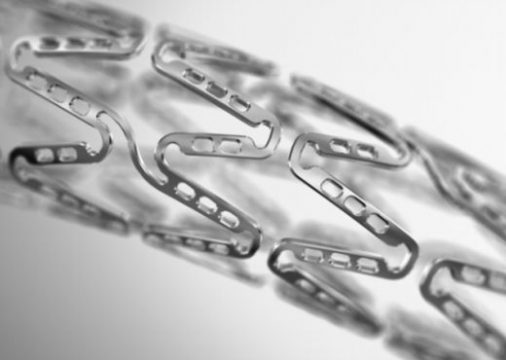
Drug eluting stents (DES) have improved considerably over the years, reducing the initial indices of instent restenosis (ISR) by roughly 5-10% a year in USA. However, DES failure might lead to neointimal hyperplasia and neoatherosclerosis, which increases the chance of developing chronic and acute coronary syndromes.
Drug coated balloons (DCB), which administer anti-proliferative agents with no need of a bare metal stent, have surged as an alternative treatment of coronary artery disease (CAD). DCBs are mainly used to treat ISR (I-A indication in Europe); however, US approval remains pending.
AGENT-IDE is a randomized multicenter trial designed to assess the use of DCBs in ISR using the paclitaxel coated AGENT (Boston Scientific) vs. uncoated balloons.
The study included patients with in stent restenosis with >2.0 mm to ≤4.0 mm reference diameter, and <26 mm length, with ≥50% target restenosis in symptomatic patients and ≥70% in asymptomatic. It excluded patients with recent acute ST elevation MI, left main PCI, venous or arterial graft PCI, CAD with < 25% ejection fraction or target vessel thrombosis.
Patients were randomized 2:1 (after successful predilation, with no significant residual restenosis or type C dissection) to DCB AGENT or uncoated balloons. Clinical followup was at 30 days, 6 and 12 months, with 5 year projected duration. Primary end point was target vessel failure at 12 months, defined as presence of ischemia driven revascularization, target vessel acute MI or cardiac death.
It included data from 600 patients, 406 randomized to paclitaxel CB and 194 to uncoated balloons. Patient mean age was 68, 26.2% were women and there was a high percentage of diabetic patients (50.7%), consistent with observed CAD (78.9% with multivessel disease and 30.1% with a history of CABG). The most common presentation diagnosis was stable angina (55.4%) and Non ST elevation MI (NSTEMI) (36.7%).
Multilayered instent restenosis was present in 43% of cases, with mean reference diameter 2.7mm and 12.8mm length (DCB) and 11.8mm for conventional balloons. Intravascular imaging was often used (73.8% of cases).
Read also: ISCHEMIA Outcomes: Does Sex Have Any Impact?
There were no differences in clinical procedural success (p=0.17) or technical success (p=0.12). At 12 months, primary end point resulted 17.9% in the DCB group and 28.6% for conventional balloon patients (HR, 0.59 [CI 95%, 0.42-0.84]; p = 0.003 for superiority). When looking separately at primary end point components, the DCB group showed lower target vessel revascularization (13.0% vs 24.7%; HR, 0.50 [CI 95%, 0.34-0.74]; p = 0.001) and lower target vessel MI (5.8% vs 11.1%; HR, 0.51 [CI 95%, 0.28-0.92]; p = 0.02).
Conclusions
The study presented by Yeh RW et al. is the largest so far to assess the safety of DCBs for coronary restenosis and the first carried out in the US. Outcomes showed paclitaxel coated balloons presented lower ischemia driven target vessel revascularization, mainly due to the lower need for ischemia driven revascularization. This lead to US FDA approval of DCBs use.
Original Title: Paclitaxel-Coated Balloon vs Uncoated Balloon for Coronary In-Stent Restenosis The AGENT IDE Randomized Clinical Trial.
Reference: Yeh RW, Shlofmitz R, Moses J, Bachinsky W, Dohad S, Rudick S, Stoler R, Jefferson BK, Nicholson W, Altman J, Bateman C, Krishnaswamy A, Grantham JA, Zidar FJ, Marso SP, Tremmel JA, Grines C, Ahmed MI, Latib A, Tehrani B, Abbott JD, Batchelor W, Underwood P, Allocco DJ, Kirtane AJ; AGENT IDE Investigators. Paclitaxel-Coated Balloon vs Uncoated Balloon for Coronary In-Stent Restenosis: The AGENT IDE Randomized Clinical Trial. JAMA. 2024 Mar 9:e241361. doi: 10.1001/jama.2024.1361. Epub ahead of print. PMID: 38460161; PMCID: PMC10924708.
Subscribe to our weekly newsletter
Get the latest scientific articles on interventional cardiology



