






Degenerative mitral valve regurgitation affects the mitral apparatus and is related to severe insufficiency. At present, surgery is the treatment of choice for patients at low risk.
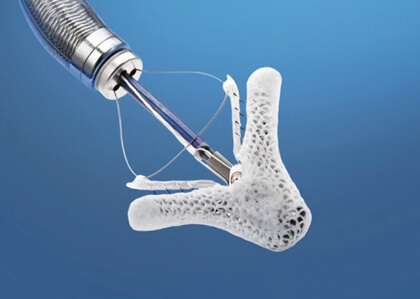
Oftentimes, this disease affects the elderly and/or those at high surgical risk, edge-to-edge repair being an excellent treatment alternative.
We all know that the different stages of ventricular function deterioration have a negative impact on disease evolution, but there is little information on the impact of edge-to-edge evolution on each of these stages.
This analysis looked at 579 patients undergoing edge-to-edge repair with MitraClip to treat degenerative mitral valve regurgitation, classified according to cardiac damage.
Stage 0 (S0) patients showed no cardiac damage. Stage 1 (S1) showed damage to the medial portion of the left ventricle or the left atrial (defined by ejection fraction ≤60%, end diastolic diameter >55 mm, end systolic diameter >35 mm, left atrial indexed volume ≥40 ml/m2 or atrial fibrillation). Stage 2 (S2) patients showed moderate damage to the left ventricle or the left atrial (defined by left ventricular ejection fraction ≤50%, end diastolic diameter >60 mm, end systolic diameter >40 mm, left atrial indexed volume ≥60 ml/m2). And stage 3 (S3), showed right heart damage (defined as right tricuspid regurgitation or severe right ventricular function deterioration).
Patients in S0 or S1 were 84, S2 319 patients and S3 176 patients.
Mean age was 82 and 52% were women. Compared against patients in S0 or S1, patients in the more advanced stages presented more comorbidities, more hospitalization for cardiac failure and higher BNP levels.
By the end of procedure, S0 and S1 patients had residual mitral valve regurgitation ≤1+.
At 2 years, survival resulted higher in S0 and S1 patients vs. the other two stages (100% vs. 89.5% vs. 78.9% vs. 75.3%, respectively, p=0.013). All stages showed a reduction in hospitalization for cardiac failure vs. the prior year, but this reduction was higher for S= and S1 patients.
Read also: Predictors of DCB Failure in De Novo Lesions.
There was an improvement in functional class in all groups, but the presence of functional class III-IV was more frequent in the more advanced stages.
There was a reduction in mitral regurgitation maintained over time in all patients.
After multivariable analysis, mortality predictors at 2 years were S2 and S3, female sex, functional class III-IV and residual mitral valve regurgitation >2+.
Conclusion
Advanced damage was associated with increased mortality risk in patients undergoing edge-to-edge repair for degenerative mitral valve regurgitation.

Dr. Carlos Fava.
Member of the Editorial Board of SOLACI.org.
Original Title: Cardiac Damage in Degenerative Mitral Regurgitation Treated With Transcatheter Mitral Edge-to-Edge Repair.
Reference: Atsushi Sugiura, et al. Circ Cardiovasc Interv. 2024;17:e013794. DOI: 10.1161/CIRCINTERVENTIONS.123.013794.
Subscribe to our weekly newsletter
Get the latest scientific articles on interventional cardiology



