






The evolution of transcatheter aortic valve replacement (TAVR), both regarding its planning and execution, has resulted in minimally invasive interventions with high safety levels. However, as is well known, there may be serious complications that require emergency cardiac surgery or “bailouts.” These surgeries can be life-saving for patients but are associated with high morbidity and mortality rates.
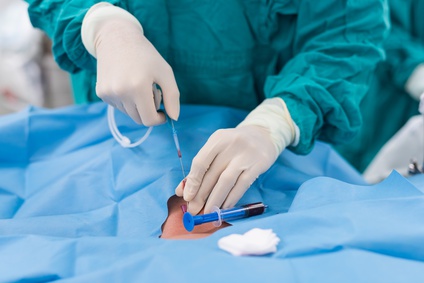
The aim of this study was to assess the incidence, temporal trends, and clinical outcomes of bailout surgery in patients undergoing transfemoral TAVR. The international CENTER2 study included patients from centers in Spain, Italy, France, Israel, Brazil, and the United States. A total of 25,771 patients underwent TAVR; 94.4% used a transfemoral approach, with backup surgical services available at all participating centers.
The primary endpoint (PFP) was the incidence of emergency surgery, defined as crossover to sternotomy due to procedural complications. Secondary clinical outcomes were analyzed according to VARC-2 definitions.
Incidence and Trends of Surgical Bailout in Transfemoral TAVR: Clinical Analysis from the CENTER2 Study
A total of 24,010 patients were included, with a mean age of 81.5 ± 6.7 years; 56% of subjects were women. The average STS score was 4.9% (with a decreasing trend over time), and the Euroscore II was 3.6%. Regarding the valves used, 43% were balloon-expandable valves, while 57% were new-generation valves. The average follow-up was 364 days.
Read also: Timing in Complete Revascularization in Acute Coronary Syndrome: BIOVASC 2-Year Followup.
A total of 125 patients (0.52%) required bailout surgery. In 91% of cases, it was conducted immediately after the procedure. The incidence of bailout surgery showed a significant decrease over time: 0.84% in 2007–2010, 0.73% in 2011–2014, 0.43% in 2015–2018, and 0.25% in 2019–2022 (Ptrend <0.001).
Bailout surgery was more frequent in women (0.61% vs. 0.41%; odds ratio [OR]: 1.51; 95% confidence interval [CI]: 1.04–2.18; P = 0.03) and in patients with balloon-expandable valves (0.67% vs. 0.40%; OR: 1.70; 95% CI: 1.19–2.43; P = 0.003). There were no significant differences in incidence based on baseline surgical risk (P = 0.65).
The main causes leading to surgical bailout included ventricular perforation (28%), often attributed to the use of stiff guidewires in the left ventricle; valve malposition (19.2%), and annular rupture (15.2%). Women had higher rates of annular rupture (19.5% vs. 7.0%; P = 0.02) and ventricular perforation (32.9% vs. 18.6%; P = 0.01).
Regarding valve type, balloon-expandable valves were associated with a higher incidence of annular rupture (24.3% vs. 3.7%; P < 0.001), while self-expanding valves were more often linked to ventricular perforation (38.9%).
Read also: Coronary Sinus Reducer for Refractory Angina: Notes from the REDUCER-I Study.
The initial survival rate following bailout surgery was 74.4%. However, in-hospital mortality for these patients was significantly higher compared to that for patients who did not require bailout (48.0% vs. 3.5%; OR: 25.71; 95% CI: 17.97–36.96; P <0.001). This elevated risk persisted at 30 days and one year (68.3% vs. 15.3%; hazard ratio [HR]: 8.60; 95% CI: 6.74–10.97; P <0.001).
There were no significant differences in 30-day mortality between the 2007–2014 and 2015–2022 periods (51.3% vs. 52.4%; P = 0.91). The complications associated with the highest mortality rates were annular rupture (68.9%) and ventricular perforation (66.7%).
Conclusions: Impact of Surgical Bailout and Associated Factors
The incidence of surgical bailout was 0.52%, with a notable decline over time (from 0.84% to 0.25%), This reflects significant improvements in procedural safety. However, when complications do occur, mortality rates remain very high, underscoring the importance of having backup surgical services available at TAVR-performing centers.
Original Title: Surgical Bailout in Patients Undergoing Transfemoral Transcatheter Aortic Valve Replacement Incidence, Trends, and Clinical Outcomes.
Reference: Aarts HM, van Nieuwkerk AC, Hemelrijk KI, Salgado Fernandez J, Tchétché D, de Brito FS Jr, Barbanti M, Kornowski R, Latib A, D’Onofrio A, Ribichini F, Ferrer MC, Dumonteil N, Abizaid A, Sartori S, D’Errigo P, Tarantini G, Del Sole AP, Orvin K, Pagnesi M, Pinar E, Dangas G, Mehran R, Voskuil M, Delewi R. Surgical Bailout in Patients Undergoing Transfemoral Transcatheter Aortic Valve Replacement: Incidence, Trends, and Clinical Outcomes. JACC Cardiovasc Interv. 2025 Jan 13;18(1):89-99. doi: 10.1016/j.jcin.2024.09.050. PMID: 39814498.
Subscribe to our weekly newsletter
Get the latest scientific articles on interventional cardiology



