






Studies with second-generation drug-eluting stents (DES) have shown that the rate of target lesion failure (TLF) increases linearly up to 5–10 years of follow-up, with an annual TLF rate of approximately 2.0%. In order to improve the long-term prognosis of patients undergoing percutaneous coronary intervention (PCI), new therapeutic strategies such as bioresorbable vascular scaffolds (BVS) and drug-coated balloons have been introduced.
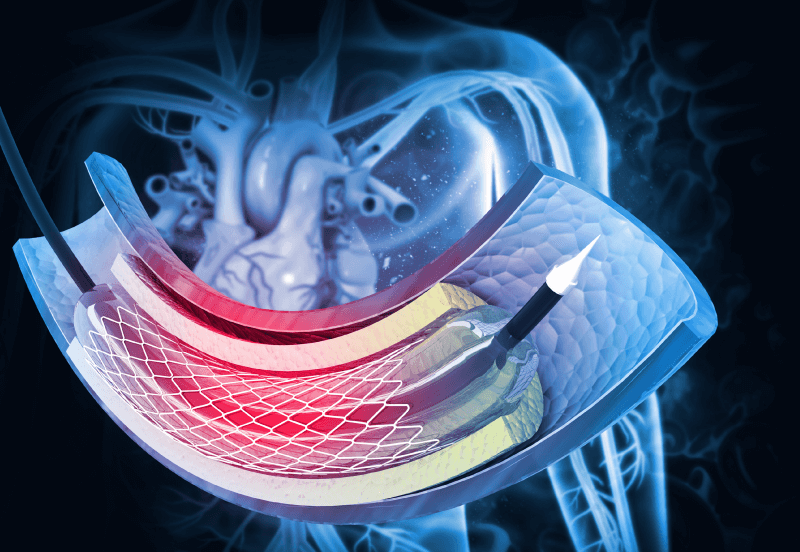
These “leave nothing behind” strategies have the potential to restore the physiology of the treated vascular segment by recovering vascular pulsatility, vasomotor function, and remodeling capacity, while eliminating the trigger for neoatherosclerosis associated with the permanent implantation of a metallic stent, with or without durable polymer. However, previous randomized trials comparing BVS with DES demonstrated higher rates of TLF and device thrombosis in patients treated with BVS.
These disappointing results were mainly driven by events occurring in the early phase and have been partly attributed to suboptimal implantation technique, the selection of small vessels, or the mechanical limitations of the device, characterized by relatively thick struts. This resulted in lower acute luminal gain, even when optimal implantation techniques were applied. Additionally, a second wave of BVS thrombosis has been described around three years after implantation, although to a lesser extent than in the early phase, mainly related to intraluminal dismantling of discontinuous or malapposed scaffold remnants.
These observations raised the hypothesis that an optimal implantation technique specifically designed for BVS might prevent these very late adverse events. Furthermore, previous BVS trials excluded patients with complex lesions, and follow-up in those studies was limited to a maximum of five years.
The objective of this study was to present the seven-year follow-up results of the COMPARE-ABSORB trial.
The primary endpoint (PFP) was target lesion failure (TLF), defined as a composite of cardiac death, target vessel myocardial infarction (TVMI), or clinically indicated target lesion revascularization (CI-TLR).
Although recruitment was stopped at 1,670 patients (80% of the planned 2,100 patients; 848 treated with BVS and 822 with DES) due to high rates of thrombosis and TVMI in the BVS group, non-inferiority for TLF at one year was achieved. At seven-year follow-up, using a landmark analysis at three years, the TLF rate was 6.7% in the BVS group versus 5.9% in the DES group (HR: 1.14; 95% CI: 0.76–1.77; p = 0.53), therefore superiority was not demonstrated. Rates of cardiac death, TVMI, and device thrombosis did not differ between groups. However, CI-TLR was significantly higher in the BVS group (4.4% vs 2.2%; HR: 1.97; 95% CI: 1.08–3.60; p = 0.023).
Conclusión: Bioresorbable vascular scaffolds in high restenosis risk lesions: no long-term clinical superiority over DES
In this randomized study of patients at high risk of restenosis, using a specific implantation protocol, BVS did not demonstrate superiority compared with DES at seven years of follow-up.
Reference: Pieter C. Smits et al EuroIntervention 2026;22:243-254.
Subscribe to our weekly newsletter
Get the latest scientific articles on interventional cardiology



 de segunda generación han demostrado que, la tasa de fallo de la lesión diana (TLF) aumenta linealmente hasta los 5 o 10 años de seguimiento, con una tasa anual de TLF de aproximadamente el 2,0 %.)