






Radial access is currently the preferred strategy for coronary angiography and percutaneous coronary interventions due to its lower rates of bleeding and vascular complications compared with femoral access. However, severe tortuosity and arterial loops may complicate the procedure, increasing procedural time, radiation exposure, and the need for crossover to another vascular access. These anatomical abnormalities are present in approximately 12–23% of patients and represent one of the main causes of radial access failure.
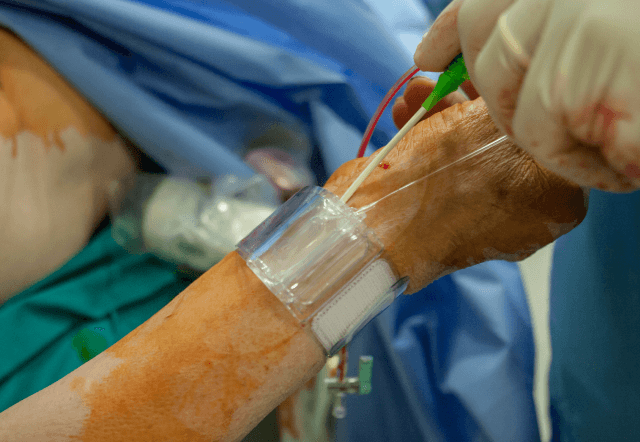
In this context, the study proposes a structured four-step protocol based on a stepwise escalation strategy:
- Step 1: postural maneuver consisting of 90° forearm flexion and internal shoulder rotation in order to align the arterial axis.
- Step 2: the “Serpentine” technique, which involves advancing the diagnostic catheter (Tiger II) using gentle alternating clockwise and counterclockwise rotational movements while slightly retracting the guidewire (2–3 cm). In this way, advancement depends mainly on the catheter rather than the wire, aiming to “untangle” the loop without forcefully pushing the system.
- Step 3: use of a hydrophilic guidewire, which improves navigability in complex anatomies.
- Step 4: balloon-assisted tracking (BAT) technique, in which a partially externalized angioplasty balloon is introduced through the tip of the diagnostic catheter. The balloon is inflated at low pressure (3–6 atm) and, mounted on a 0.014” guidewire, allows atraumatic advancement of the system through the tortuous segment, creating a smoother and more coaxial profile.
A total of 2,389 patients undergoing radial coronary angiography between 2020 and 2022 at a tertiary center were included. Among them, 130 patients (5.44%) presented extreme tortuosity or arterial loops. The mean age was 74 years, 58% were male, and there was a high prevalence of dyslipidemia (76%), hypertension (74%), and diabetes (28%). Additionally, 58% of patients presented with non-ST-elevation acute coronary syndrome.
The overall success rate of radial access using this protocol was 95.4% (124/130 patients), with only 4.6% requiring crossover to another vascular access. Success by step was 37% in step 1, 47% in step 2 (Serpentine technique), 7.7% in step 3, and 3.8% in step 4 (BAT), allowing 84% of cases to be resolved within the first two steps. Total procedural time was 115 ± 143 seconds, while the mean contrast volume ranged between 66 and 76 ml. The overall success rate for coronary angiography reached 98%.
In terms of safety, no major complications such as compartment syndrome or paresis were reported. Minor complications included hematoma in 3.8% of cases, radial spasm in 2.3%, dissection in 2.3%, and minor bleeding (BARC 1) in 1.5%. Access-site pain was reported in 27% of patients, and all patients maintained a palpable radial pulse at discharge.
In conclusion, this structured four-step protocol represents an effective and safe strategy for the management of loops and tortuosity during radial access, with high success rates, low crossover requirements, and reductions in procedural and fluoroscopy times, without a significant increase in complications.
Original Title: A four-step protocol to overcome loops/tortuosity during transradial coronary interventions: introducing the “Serpentine” technique.
Subscribe to our weekly newsletter
Get the latest scientific articles on interventional cardiology



