






Critical limb ischemia (CLI) represents one of the most advanced stages of peripheral arterial disease (PAD). In a significant proportion of patients, distal anatomy, severe vascular damage, or comorbidities limit the feasibility of conventional surgical or endovascular revascularization. It is estimated that approximately 10% of patients with CLI have no viable revascularization option, exposing them to a poor prognosis with high rates of major amputation and mortality.
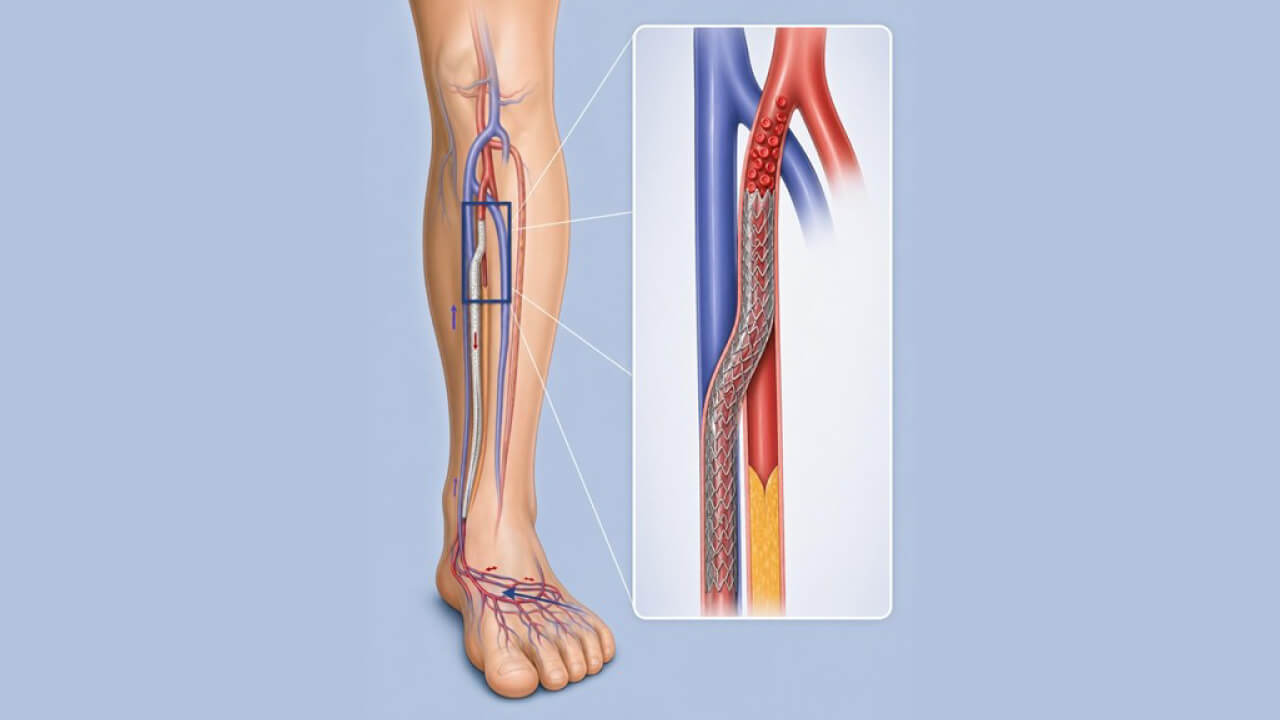
The PROMISE III study evaluated transcatheter arterialization of deep veins (TADV) using the LimFlow system (Striker). This strategy aims to improve distal perfusion through an endovascular bypass from a relatively preserved vein to the foot in so-called “no-option” patients.
This was a prospective, multicenter, single-arm study that included patients with PAD at Rutherford stages 5 or 6. The primary endpoint (PEP) was amputation-free survival at 6 months. Secondary endpoints included limb salvage, overall survival, wound healing, pain, and quality of life.
A total of 100 patients (103 limbs) were treated. All patients had non-healing ulcers or gangrene; 74.8% were classified as Rutherford 5 and 25.2% as Rutherford 6. At 6 months, amputation-free survival was 80.7%, with a limb salvage rate of 86.5% and overall survival of 93.8%. Additionally, approximately 80% of wounds showed complete or partial healing.
Read also: Beyond TAVI: Cardiac Rehabilitation as a Determinant of Clinical Outcomes.
Regarding quality of life, patients reported a significant reduction in pain, with the mean score decreasing from 6.0 at baseline to 2.0 at 6 months (p<0.0001). According to the VascuQoL-6 questionnaire, concern about poor circulation decreased from 90% to 45%; limitations in social activities from 70% to 40%; sleep disturbances from 80% to 40%; and the daily burden related to foot wounds from 79% to 39% at 6 months.
Conclusions
The PROMISE III study suggests that transcatheter arterialization of deep veins with LimFlow may be associated with improved amputation-free survival, meaningful limb salvage rates, and, importantly, significant symptomatic improvement at 6 months in patients with CLI who lack conventional revascularization options.
Original Title: PROMISE III: 6-Month Clinical and Quality of Life Outcomes in CLTI Patients Treated with Transcatheter Arterialization of the Deep Veins
Presented by: Mehdi H. Shishehbor en el SCAI 2026 Scientific Sessions & CAIC-ACCI Summit, Montreal, Canadá.
Subscribe to our weekly newsletter
Get the latest scientific articles on interventional cardiology



 representa uno de los estadios más avanzados de la enfermedad arterial periférica (EAP).)