






Original Title: Transcatheter Mitral Valve Replacement in Native Mitral Valve Disease With Severe Mitral Annular Calcification: Results From the First Multicenter Global Registry
Reference: J Am Coll Cardiol Intv. 2016;9(13):1361-1371. doi:10.1016/j.jcin.2016.04.022
Gentileza del Dr. Agustín Vecchia.
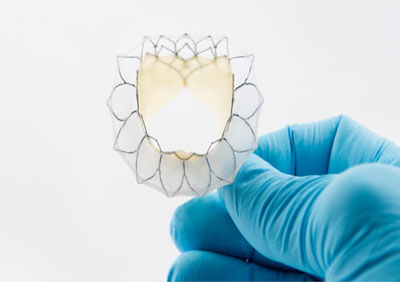 The risk underlying the surgical approach to mitral valve replacement in patients with severe mitral annular calcification is high. A number of published cases show the feasibility of prosthetic valve implantation through catheters introduced percutaneously, by direct transatrial approach, or by transapical antegrade approach, in this group of patients.
This study seeks to assess the outcomes of the early experience of transcatheter mitral valve replacement (TMVR) with balloon-expandable valves in patients with severe mitral annular calcification (MAC) and reports the first large series from a multicenter global registry.
From September 2012 to July of 2015, 64 patients in 32 centers underwent this procedure. Mean age was 73 ± 13 years, with thoracic surgeon score 14.4 ± 9.5%. 66% Mean mitral gradient was 11.45 ± 4.4 mm Hg and mean mitral area was 1.18 ± 0.5 cm2.
Inclusion criteria was symptomatic severe mitral stenosis, with severe calcified annulus in patients unfit for conventional surgery due to comorbidities or technical matters.
Annulus calcification was evaluated by computed tomography angiography and was considered severe when diffuse and extensive.
The following balloon expandable prosthesis were used:
- SAPIEN: 7.8%
- SAPIEN XT: 59.4%
- SAPIEN 3: 28.1%
As regards access sites:
- Transatrial: 15.6%
- Transapical: 43.8%
- Transseptal: 40.6%
Taking into account the “Mitral Valve Academic Research Consortium” criteria, primary success was achieved in 46 patients (72% of the population).
Among complications: a second valve was required in 11 patients (17.2%), five of them due to migration and six due to regurgitation. In addition, six patients had dynamic obstruction of the left ventricular outflow tract with direct hemodynamic compromise.
Post procedural mean valve gradient was 4 ± 2.2 mmHg. Paravalvular leak was mild or absent in all patients. All-cause mortality at 30 days was 29.7% (cardiovascular: 12.5% and non-cardiac: 17.2%). 84% of survivals were in functional class I or II at 30 days (n=25).
Conclusion
Transcatheter mitral valve replacement with balloon expandable valves is feasible but associated to an important number of complications, which makes it an interesting alternative strategy for selected patients at high surgical risk.
Editorial Comment
So far, this is largest review of this promising technique to treat a condition of high surgical risk. For the most part, the series includes patients initially treated for mitral valve stenosis that eventually developed insufficiency with severe annulus calcification.
Some technical aspects against the use of this technique are the oval morphology of the mitral annulus, the subvalvular apparatus, the interaction between left ventricular outflow tract and aortic valve, annulus size and the fact that there are no prosthetic valves especially designed for this technique. Despite the fact that the authors chose slightly bigger valves to reduce paravalvular leak, there were no cases of annulus fracture or perforation in the whole series. As regards leak, there were no cases of mild/severe leak.
Transcatheter mitral valve replacement with balloon expandable valves could be an alternative for patients with mitral valve regurgitation, severe annulus calcification and very/too high surgical risk. However, this technique still calls for further research.
Courtesy of Dr. Agustín Vecchia. German Hospital, Buenos Aires, Argentina.
We value your opinion. You are more than welcome to leave your comments, thoughts, questions or suggestions here below.



