






Courtesy of Dr. Carlos Fava.
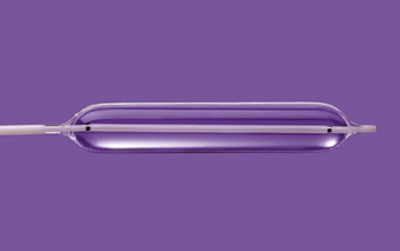 The provisional approach is the standard strategy to treat bifurcations, but it might cause dissection of the ostium, a serious complication of the side branch. The use of non-compliant balloons (NCB) ensures uniform, constant, and controlled expansion along balloon length, reducing the risk of dissection.
The COBIS II registry enrolled 2,897 patients with bifurcation lesions (≥2.5 mm main vessel and ≥2.3 mm side branch diameters).
26% (752 patients) were treated with NCB. After propensity score matching, there were 710 patients in each group.
Procedural success was higher in patients receiving NCB:
With NCB: 79%
Without NCB: 73.9%
[p=0.01]
Angiographic success of side branch was:
With NCB: 79.7 %
Without NCB: 75.4%
[p=0.03].
The use of NCB positively correlated with lower SB dissection (0.1% vs. 1.1%; p=0.04)
Follow up was at 36 months in 96.3% of the population. Combined events rate resulted lower in the NCB group (HR 0.64, CI 95% 0.46-0.91; p=0.01), same as cardiac death (HR 0.14, CI 95% 0.03-0. 64; p=0.01) and stent thrombosis (probable, definite and possible) and there was a tendency towards a lower target vessel revascularization rate.
Conclusion
The use of non-compliant balloons was associated to a lower rate of events after PCI at long term in patients with bifurcation lesions in coronary arteries.
Editorial Comment
Bifurcations are gaining in complexity, as more experienced operators and new stents advance over more challenging lesions.
The new advancement in balloons to improve stent implantation and the new suggested techniques such as proximal optimization (POT) will ensure better results in more and more complex lesions.
Courtesy of Dr. Carlos Fava. Favaloro Foundation, Buenos Aires, Argentina.
Original Title: Impact of non-compliant balloons on long-term clinical outcomes in coronary bifurcation lesion: results from the COBIS (COronary BIfurcation Stent) II registry
Reference: Taek Kyu Park, et al. EuroIntervention2016;12:456-464
We value your opinion. You are more than welcome to leave your comments, thoughts, questions or suggestions here below.



