



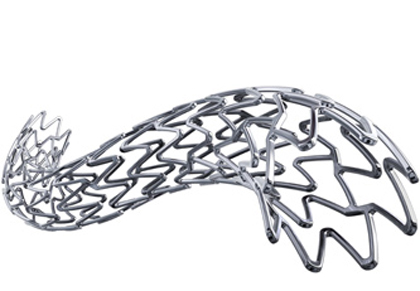
EVOLVE II: Diabetes Substudy: Results at 3 Years after the SYNERGY Stent in Diabetics

Courtesy of SBHCI

EVOLVE II: Diabetes Substudy: Results at 3 Years after the SYNERGY Stent in DiabeticsDiabetic patients have worse evolution after coronary PCI. Drug eluting stents with bioresorbable polymers were designed to facilitate arterial healing, and reduce inflammation and late and very late thrombosis risk.


This sub-study of diabetic EVOLVE II patients presents the 3 year outcomes of the SYNERGY stent.


The EVOLVE II included 1684 patients with ≤3 lesions in one or two native arteries with a lesion length of ≤34 mm and a reference diameter of ≥2.25 mm and ≤ 4.0 (the study excluded left main, CTO, vein grafts, instent restenosis and ST elevation MI).


Of the total number of patients, 846 received the SYNERGY stent, and 838 the PROMUS Element Plus stent.

Primary end point (cardiovascular death, vessel related MI, and target vessel revascularization) saw a 12.2% incidence in diabetic patients, which is comparable to the 10.8% of the general population, despite 30% of diabetic patients were insulin-dependent.


It is worth mentioning that 44% of diabetic patients were still on antiaggregants at 3 year follow up.


Conclusion

The 3 year outcomes reinforce the evidence in favor of the use of the SYNERGY stent in diabetic patients.


Courtesy of la SBHCI

 

Dra. Martine Gilard
Dra. Martine Gilard

Original Title: Outcomes after PCI with a bioresorbable polymer- coated, everolimus-eluting coronary stent in patients with diabetes: three-year results from the EVOLVE II Diabetes Substudy.

Presenter: Martine Gilard.


GilardMartine


Subscribe to our weekly newsletter

Get the latest scientific articles on interventional cardiology

We are interested in your opinion. Please, leave your comments, thoughts, questions, etc., below. They will be most welcome.


More articles by this author

Long-Term Cardiovascular Risk in Patients With ANOCA: A Clinical Reality to Consider?

Chronic stable angina (CSA) remains one of the most frequent reasons for referral to diagnostic coronary angiography (CAG). In a substantial proportion of these...

Perforation Management in Bifurcations: Bench Testing of Bailout with Covered Stents

Coronary perforations during PCI are one of the most dreaded complications in interventional cardiology, especially in bifurcations. Though rate, this critical situation requires an...

EMERALD II: Non-Invasive Coronary Anatomy and Physiology (CCTA) in ACS Prediction

Despite steady progress in secondary prevention and medical treatment optimization (OMT), acute coronary syndrome (ACS) remains one of the leading causes of cardiovascular morbimortality....

Left or Right Transradial Approach? Comparing Radiation Exposure in Coronary Procedures

Radiation exposure during percutaneous procedures is a problem both for patients and operators. The transradial is currently the preferred approach, vs. femoral; however, whether...

LEAVE A REPLY

Please enter your comment!
Please enter your name here

Related Articles

SOLACI Sessionsspot_img

Recent Articles

Long-Term Cardiovascular Risk in Patients With ANOCA: A Clinical Reality to Consider?

Chronic stable angina (CSA) remains one of the most frequent reasons for referral to diagnostic coronary angiography (CAG). In a substantial proportion of these...

Perforation Management in Bifurcations: Bench Testing of Bailout with Covered Stents

Coronary perforations during PCI are one of the most dreaded complications in interventional cardiology, especially in bifurcations. Though rate, this critical situation requires an...

Transapical TMVR in High Risk Patients: Intrepid 5-Year Outcomes

Moderate to severe mitral valve regurgitation (MR) continues is still a high prevalence condition with bad prognosis, particularly among the elderly with left ventricular...
