






Courtesy of Dr. Carlos Fava.
The gold standard for failing aortic bioprosthesis has traditionally been surgery. However, since the first valve in valve (TAV-in-SAV) report in 2007, by Wenaweser, transcatheter valve implantation has emerged as a valid alternative. Even so, at present there is not enough scientific evidence in this regard.
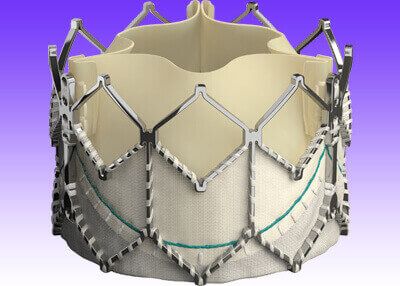
The present study analyzed 205 patients presenting failing aortic bioprosthesis. 126 (61.5%) were reoperated (redo-SAVR) and 798 received TAV-in-SAV.
Read also: “How Is Renal Function Affected by Endoprosthesis Implantation?”
Those receiving TAV-in-SAV were older, had more comorbidities, more cardiac failure and had higher STS and EurosSCORElog. After propensity score matching, the sample population was homogenized to 78 pares.
Mortality at 30 days and one year was numerically inferior in the TAV-in-SAV group, though it had no statistical significance (6.4% vs. 3.9% and 13.1% vs. 12.3%). Neither were there differences in stroke, AMI or need for definite pacemaker. The need for dialysis driven by acute kidney failure was numerically lower in the TAV-in-SAV group (11.5% vs. 3.8% p=0.13). Outcomes were similar across the population.
Hospitalization was lower in the TAV-in-SAV group (p=0.001).
Read also: “TAVR in Patients with Pure vs. Mixed Aortic Stenosis: Benefits and Evolution”.
Gradients at 30 days were higher in the TAV-in-SAV group (18.1 mmHg vs. 14.3 mmHg p=0.01). This was at the expense of the Edwards valves (21.3 mmHg gradient), not with the CoreValves (15.4 mmHg) that showed no difference with redo-SAVR. The presence of >20 mmHg gradient was twice as high with the Edwards compared against the CoreValve and redo-SAVR (51.9% vs. 22.6% and 17.1%).
Conclusion
Patients presenting failing aortic bioprosthesis due to severe aortic stenosis treated with redo-SAVR or TAV-in-SAV have similar evolution at 30 days and one year.
Commentary
This group currently presents a great challenge and is being researched at the moment.
This retrospective study showed similar evolution in both groups, but with less hospitalization days in the TAV-in-SAV. However, a nine-day hospital stay is still high.
It is important to choose the right transcatheter valve, since one of these presented higher post-implantation gradients. This will certainly improve with experience and the development of new devices.
Gentileza del Dr. Carlos Fava.
Original title: Transcatheter aortic valve implantation versus redo surgery for failing surgical aortic bioprostheses. A multicenter propensity score analysis.
Reference: Marco Spaziano, et al. EuroIntervention 2017;13:1149-1156.
Get the latest scientific articles on interventional cardiologySubscribe to our weekly newsletter
We are interested in your opinion. Please, leave your comments, thoughts, questions, etc., below. They will be most welcome.



