






The systematic reduction of inefficiencies in the catheterization laboratory (such as the improvement of lab room start times and room turnaround times) can definitely improve the productivity of a Department of Interventional Cardiology without forcing its members to stay in the facilities longer. As a matter of fact, work can be finished even faster with such changes.
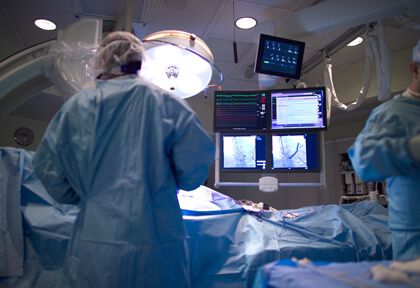 This study, carried out in a center with 10 cath labs, will be published in the upcoming issue of JACC Intv and hints at ways of optimizing production, improving patient satisfaction, and arriving home by dinner time.
Many operational inefficiencies and redundant procedures set us back day after day. In that sense, there are many things we could do to improve these deficiencies (without even taking into account administrative flaws beyond our scope).
Identifying these inefficiencies is the first step towards improvement, since the lack of standardization results in great variations among institutions.
Read also: What Is the Prognosis for Reinterventions in Critical Lower Limb Ischemia?
One of the variables in which time variation is the greatest, thus offering great potential for improvement, is patient preparation, during which medical records are verified, informed consents are signed, and venous accesses are obtained. All of these actions must be performed before going into the cath lab. Once the preparation checklist has been reviewed, there cannot be delays while moving the patient towards the laboratory (e.g., elevator “bottlenecks”).
Once the patient is in the cath lab per se, all personnel involved must know without a shadow of a doubt who the patients is, which procedure will be carried out, and which vascular access will be used, in order to avoid start delays while setting up the sterile fields and preparing all material.
Another classic delay moment may take place once the patient is ready, sterile fields are set up, and vascular access has been obtained, if the interventional physician in charge of the procedure is yet to arrive. In that sense, while the checklist is reviewed, the physician in charge must be notified that his/her patient is up next in the cath lab.
Read also: Red Light for TAVR in Low Surgical Risk Patients.
Once the procedure starts, times are fixed. If the right coronary artery is abnormal or the lesion fails to dilate and a rotational atherectomy must be carried out, there is nothing to do but be patient.
Once the procedure is finished and everything is as it should be, there are new opportunities for improvement. In cases in which a transfemoral access is used, the patient can be moved to a recovery area so that the introducer can be removed. By the time the final control angiography is carried out, personnel in charge of cleaning and setting up the cath lab must be ready to start working as soon as the patient is out. By that time, the checklist for the next patient must have already been reviewed.
In this study, actions similar to these improved start times an average of 17 minutes (p = 0.0024); turnaround times improved about 5 minutes (p < 0.001), and the proportion of days at full lab utilization improved from 7.7% to 77.3% (p < 0.001). These figures multiplied by the number of patients and by the number of cath labs in this center result in a tremendous amount of time.
Read also: Surprising Prognosis for Normal ACS.
Most importantly, such actions improved both patient and cath-lab personnel satisfaction, since employees were not forced to work overtime, at night, or during weekends.
Original title: Operational Efficiency and Productivity Improvement Initiatives in a Large Cardiac Catheterization Laboratory.
Reference: Grant W. Reed et al. J Am Coll Cardiol Intv 2018, online before print.
Get the latest scientific articles on interventional cardiologySubscribe to our weekly newsletter
We are interested in your opinion. Please, leave your comments, thoughts, questions, etc., below. They will be most welcome.



