






The prognosis of patients with heart failure and mitral regurgitation secondary to ventricular dysfunction and dilation is guarded. Percutaneous mitral valve treatment of these patients may at least improve their symptoms.
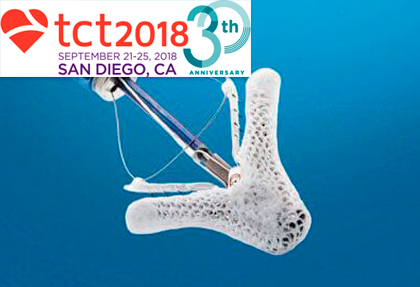 This study was conducted in 78 sites in the United States and Canada, and included patients with moderate-to-severe (3+) or severe (4+) mitral regurgitation who remained symptomatic despite optimal medical therapy. Patients were randomized to percutaneous mitral valve treatment plus optimal medical therapy (device group) or optical medical therapy alone (control group). The primary efficacy endpoint was all-cause hospitalizations within 24 months of follow-up, and the safety endpoint was freedom from device-related complications at 12 months.
Overall, 614 patients were randomized (302 were assigned to the device group and 312 to the control group).
The annualized rate of hospitalizations for heart failure during follow-up was 35.8% per patient-year in the device group and 67.9% in the control group (p < 0.001). The rate of freedom from device-related complications was 96.6%, thus achieving the pre-specified performance goal. Death from any cause at 24 months occurred in 29.1% of the patients in the device group vs. 46.1% in the control group (p < 0.001).
Read also: TCT 2018 | TALENT: Ultrathin Struts and Bioresorbable Polymer at the Lowest Possible Cost.
The COAPT trial, presented at TCT 2018 and published simultaneously in the New England Journal of Medicine (NEJM), features outcomes that clearly differ from those of the MITRA-FR trial (recently presented at the 2018 European Society of Cardiology Congress in Munich and published in this same prestigious journal). It is the first study showing prognosis improvement in patients with heart failure and mitral regurgitation secondary to ventricular dysfunction.
Original title: Transcatheter Mitral-Valve Repair in Patients with Heart Failure.
Presenter: Gregg W. Stone.
Get the latest scientific articles on interventional cardiologySubscribe to our weekly newsletter
We are interested in your opinion. Please, leave your comments, thoughts, questions, etc., below. They will be most welcome.



