






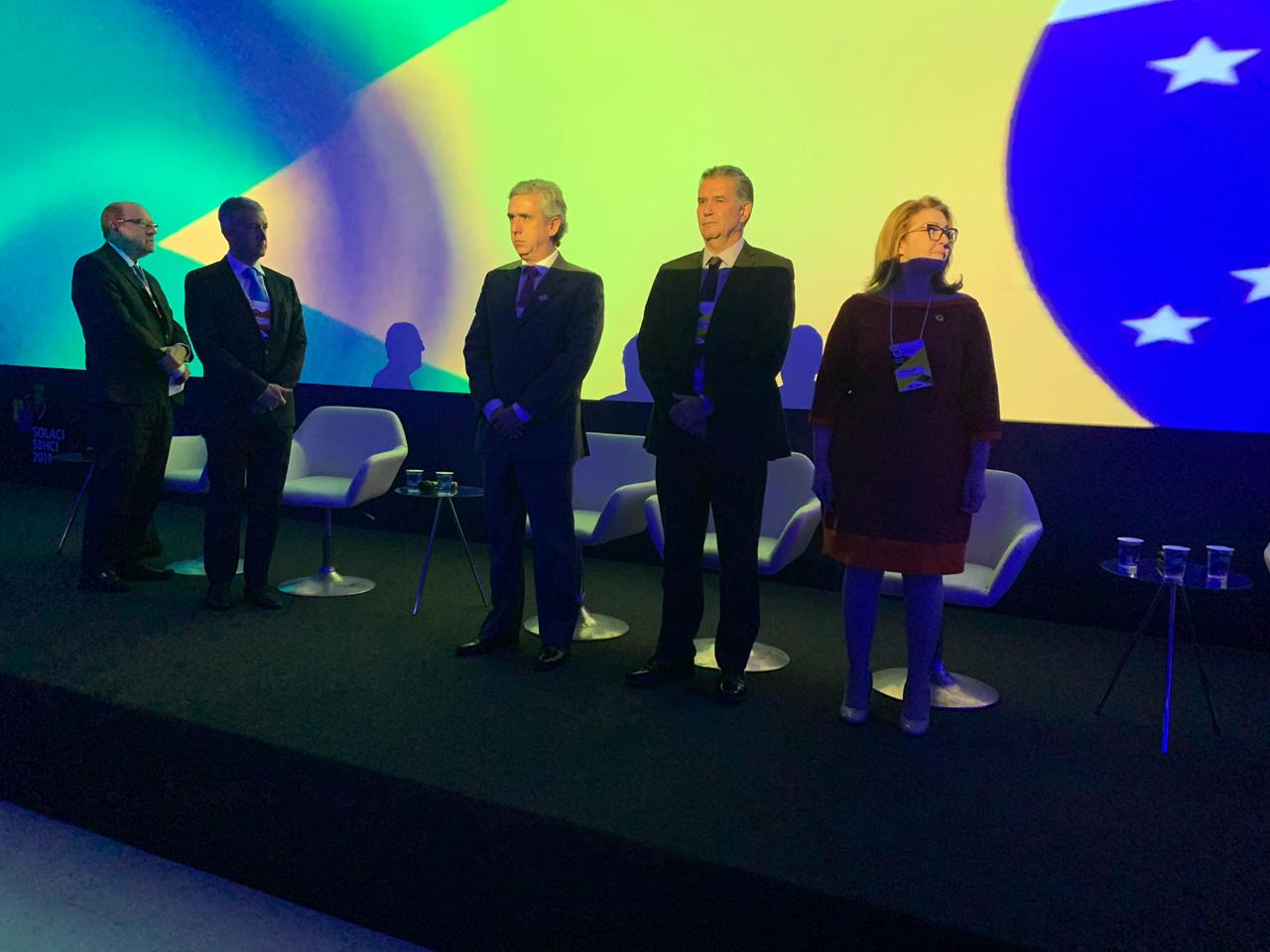
During the opening ceremony of SOLACI-SBHCI 2019, the president of the Latin American Society of Interventional Cardiology, Dr. José Luis Leiva Pons, celebrated the first 25 years of our society’s life together with some of the greatest international personalities in our field (Dr. Gregg Stone, Dr. Martin Leon and Dr. Patrick Serruys) and former SOLACI presidents like Dr. Expedito Ribeiro and Dr. Alexandre Abizaid.
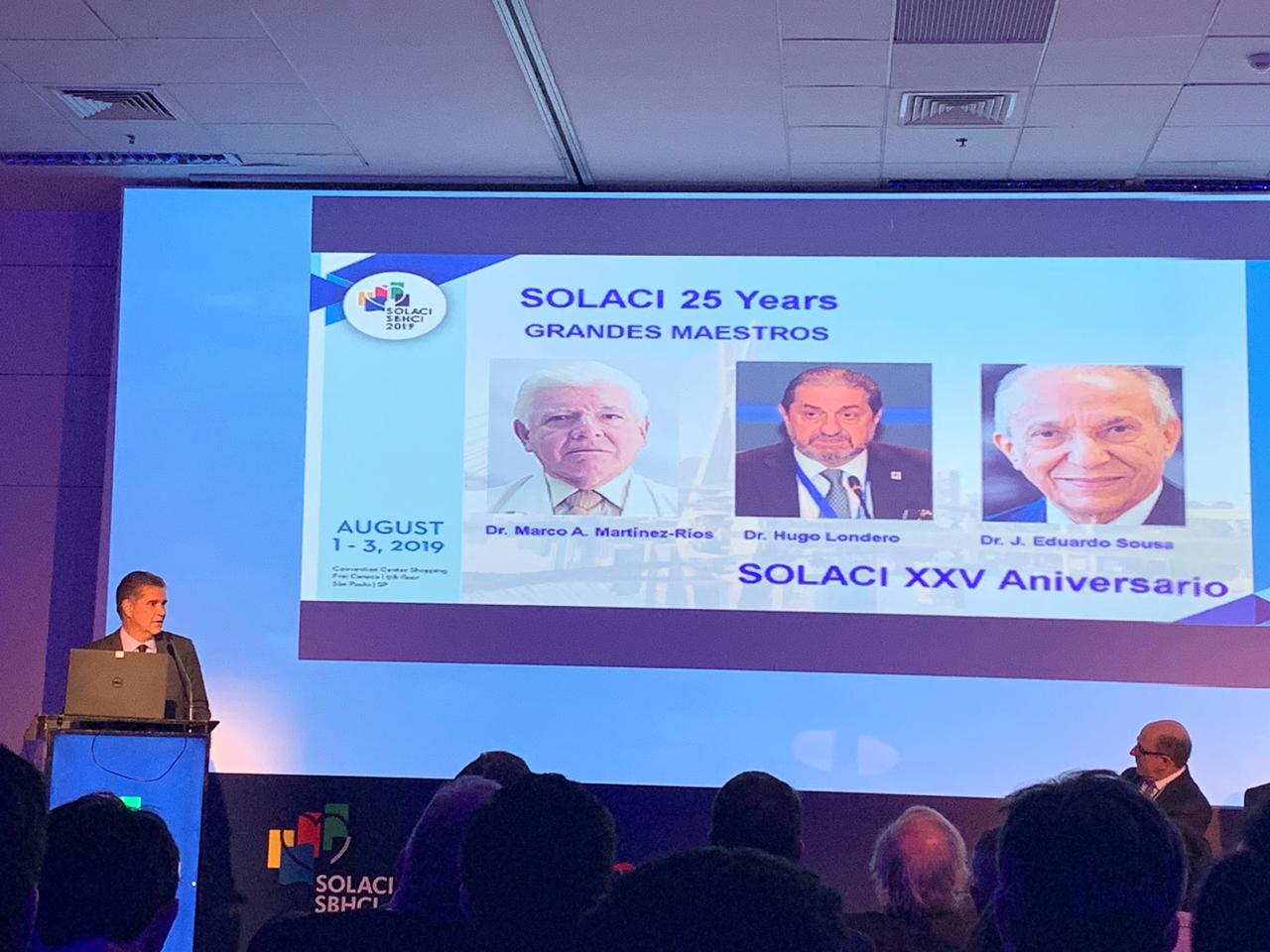
Dr. Leiva Pons remembered the start of our society with the creation of GLACI (the Latin American Group of Interventional Cardiology), back on June 26, 1993, and reminded us of the fundamental contributions of Drs. Hugo Londero and Alberto Sampaolesi (Argentina), J. Eduardo Sousa and Costantino Costantini (Brazil), Eugenio Marchant, Alfredo Ramírez, Hernán Chamorro and Hector Ducci (Chile), Alfredo Buitrón and Walter Espasandín (Uruguay), José Condado (Venezuela), and Marco Antonio Martínez Ríos, Manuel Gil, Jorge Gaspar, Ernesto BanHayasi, Ramón Villavicencio and Marco A. Peña Duque (México).
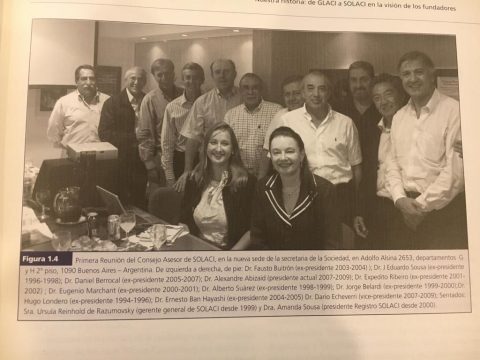
At the same time, Dr. Leiva evoked what was the official foundation of our society on November 15, 1994, during the American Heart Association’s annual meeting in Dallas, Texas, and the expansion and evolution of SOLACI in the hands of great presidents like Drs. Alfredo Martínez Ríos, Hugo Londero, J. Eduardo Sousa, Alberto Suárez, Jorge Belardi, Eugenio Marchant, Expedito Ribeiro, Irving Peña, Fausto Buitrón, Ernesto Ban Hayasi, Daniel Berrocal, Alexandre Abizaid, Darío Echeverri, Oscar Méndiz, Jamil Abdalla Saad and Ricardo Lluberas.
As corollary, Dr. Leiva Pons concluded his speech by vindicating the great heroes of SOLACI’s: the expert international physicians, founding partners and members, nurses and technicians, the industry and their support, and SOLACI’s office. Drs. Gregg Stone, Martin Leon and Patrick Serruys followed with a few words.
Subscribe to our weekly newsletter
Get the latest scientific articles on interventional cardiology
We are interested in your opinion. Please, leave your comments, thoughts, questions, etc., below. They will be most welcome.



