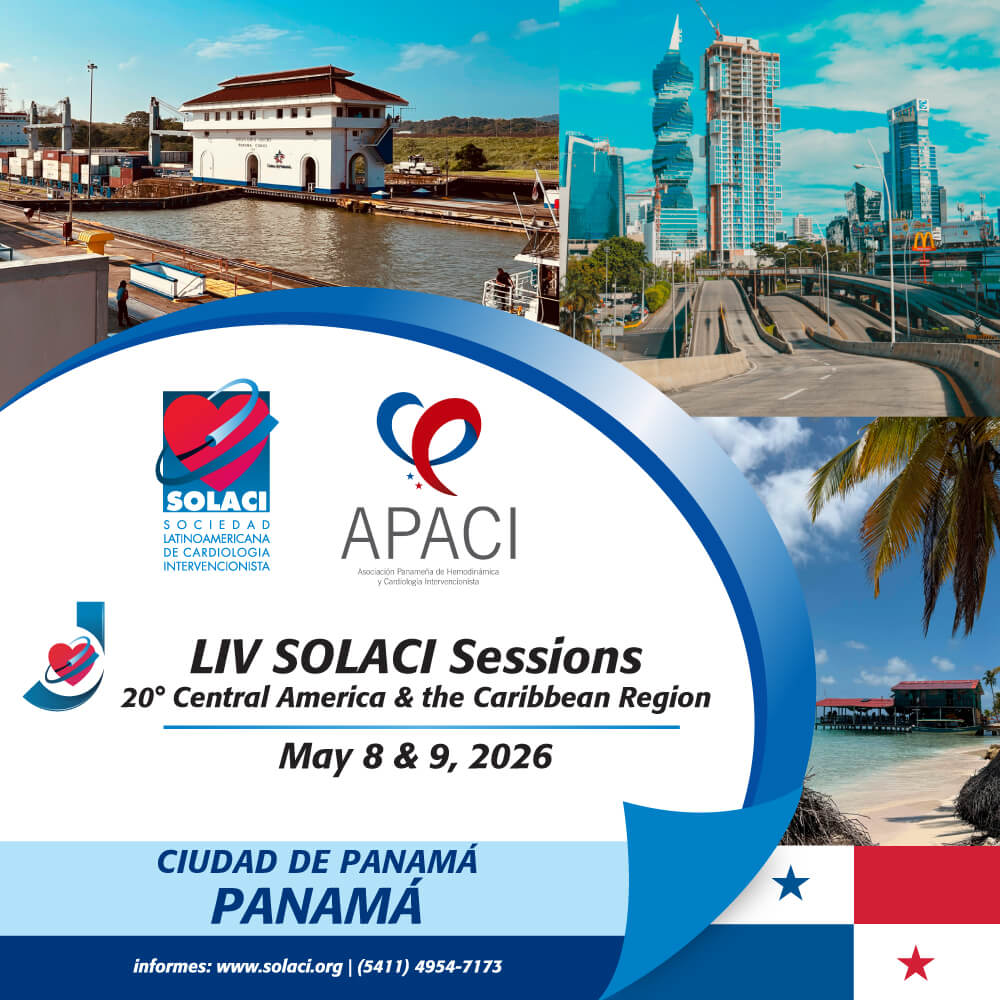
The Latin American Society of Interventional Cardiology (SOLACI) invites the community to the 5th International Conference on Clinical and Interventional Cardiology (Coronary and Structural),...
The call for submissions is now open to participate in the Young Interventional Cardiologists Competition at the Panama 2026 Regional Meeting, which will take...
Following the presentation of the SURViV trial in the Late Breaking Clinical Trials sessions at the American College of Cardiology Congress, Dr. Dimytri Siqueira...
Optimizing antithrombotic therapy in the prehospital phase of ST-segment elevation myocardial infarction (STEMI) remains challenging due to the delayed onset of action of P2Y12...
The Latin American Society of Interventional Cardiology (SOLACI) invites the community to the 5th International Conference on Clinical and Interventional...
Severe tricuspid regurgitation (TR) is associated with chronic systemic venous congestion, recurrent hospitalizations for heart failure (HF), and a significant deterioration in quality of...
Paclitaxel-coated balloons have demonstrated improved patency in peripheral arterial disease (PAD), although questions remain regarding safety and applicability across different vascular territories. In this...
Optimization of percutaneous coronary intervention (PCI) in complex lesions remains a relevant clinical challenge. In this context, the IVUS-CHIP trial was designed to evaluate...