The Latin American Society of Interventional Cardiology (SOLACI) invites the community to the 5th International Conference on Clinical and Interventional Cardiology (Coronary and Structural),...
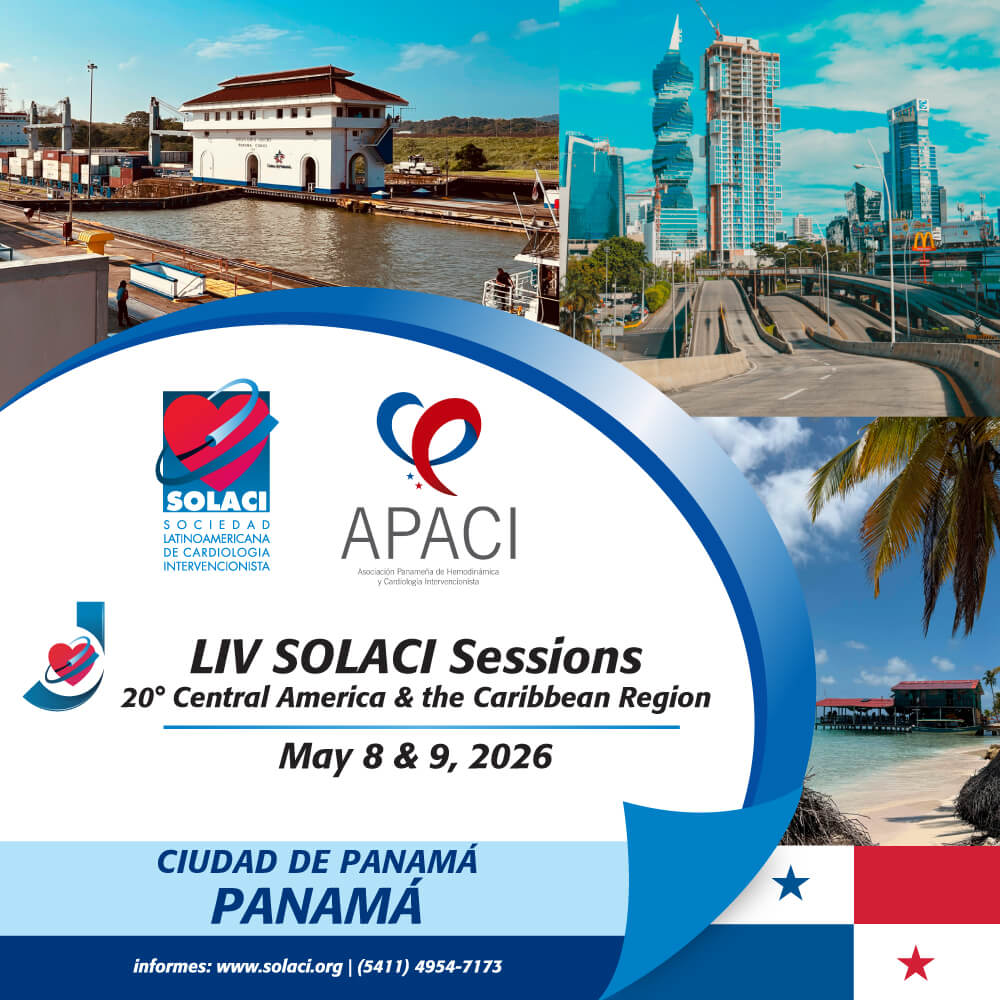
The call for submissions is now open to participate in the Young Interventional Cardiologists Competition at the Panama 2026 Regional Meeting, which will take...
Following the presentation of the SURViV trial in the Late Breaking Clinical Trials sessions at the American College of Cardiology Congress, Dr. Dimytri Siqueira...
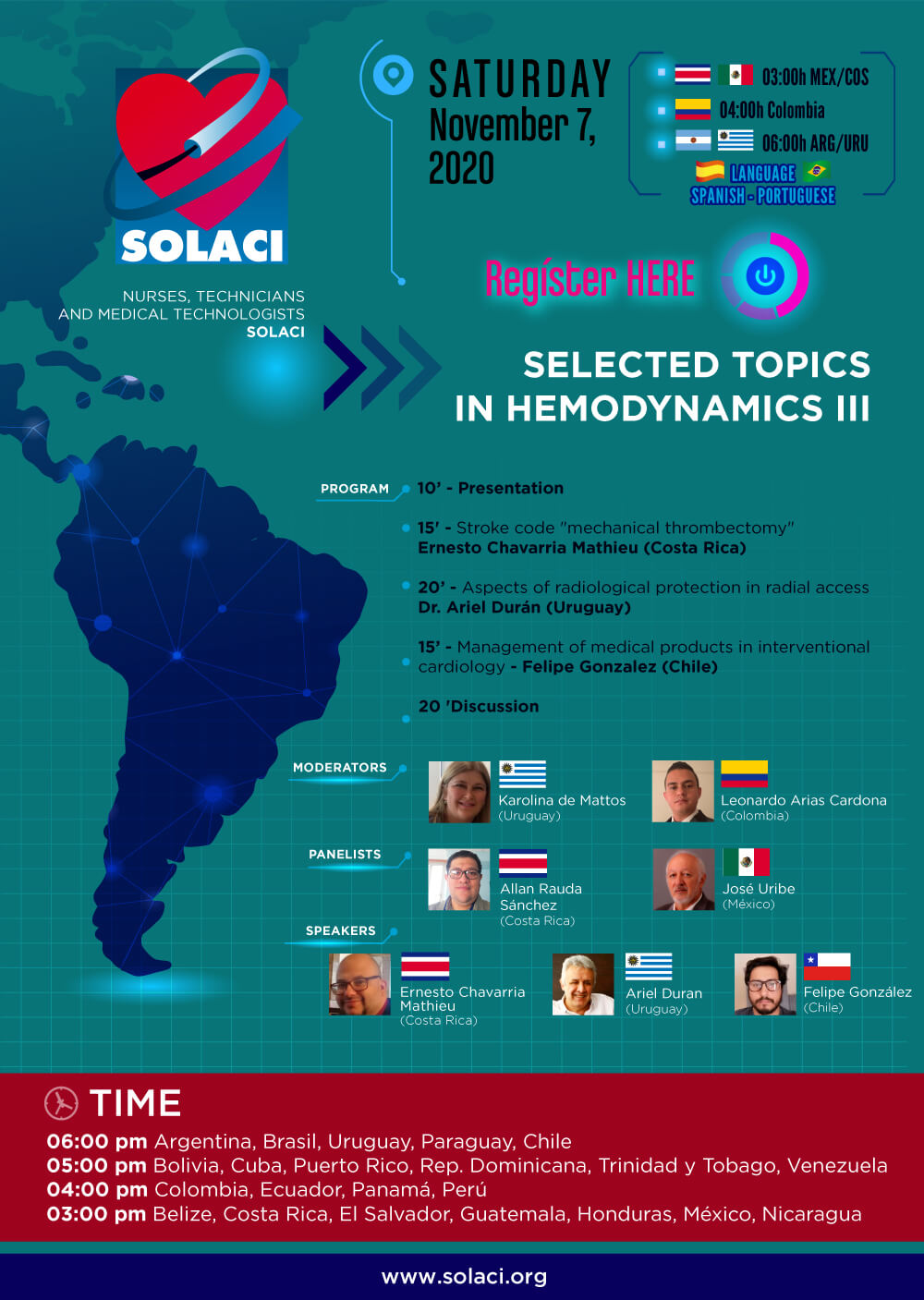
The Latin American Society of Interventional Cardiology (SOLACI) invites you to participate in a new Live SOLACI Webinar specially designed for technicians, nurses, and...
The Latin American Society of Interventional Cardiology (SOLACI) invites the community to the 5th International Conference on Clinical and Interventional...
Carotid free-floating thrombus (cFFT) is a rare entity with a high embolic risk, associated with acute neurological events such as stroke or transient ischemic...
Letter to the editor: Juan Manuel Pérez Asorey
Percutaneous left atrial appendage closure (LAAO) is currently going through one of the most interesting stages of...
Percutaneous left atrial appendage closure has been proposed as an alternative to anticoagulation in patients with atrial fibrillation and high bleeding risk; however, comparative...