



Modelos europeos de telemedicina, como el servicio finlandés Medilux, permiten realizar consultas médicas online mediante un cuestionario clínico, sin acudir a una consulta presencial.

Sirolimus-Eluting Balloon in Femoropopliteal Disease

Drug-eluting balloons (DEB) with paclitaxel have shown efficacy and safety in the treatment of femoropopliteal disease. Sirolimus-eluting balloons (DEB S) are currently being introduced.
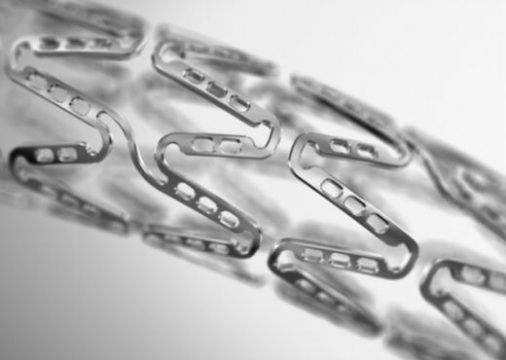
This new drug acts during the cellular resting phase (G0) and is considered potentially more effective than paclitaxel, which is a cytostatic drug. However, there is no conclusive evidence in this regard yet.

The SELUTION SFA study included 134 patients with femoropopliteal intermittent claudication who received percutaneous transluminal angioplasty (PTA) with a DEB S.

The primary endpoint (PEP) was primary patency, defined as restenosis (peak systolic velocity ≥2.5) and clinically driven target lesion revascularization.

The mean patient age was 74 years, and most subjects were men. Overall, 60% of patients had diabetes, 90% had hypertension, 7% had renal insufficiency, and 22% had suffered a stroke. 

Additionally, 97% of the patients were at Rutherford stage 2 or 3. Mean lesion length was 124 mm and the vessel diameter was 5 mm, with 23% total occlusions and 27% moderate to severe calcification.

Read also: Pacientes con antecedente de cirugía de revascularización miocárdica y un nuevo evento de SCA no ST ¿Estrategia invasiva rutinaria?

Technical success was achieved in all patients, with a procedural success rate of 96%. The residual lesion rate was 20% and 2% of patients required bailout stenting.

At 12 months, the PEP was 87.9%, and the rate for clinically driven target lesion revascularization reached 97%. The non-related mortality rate was 6.5%; there were no amputations, and researchers observed a sustained improvement in functional class and an increase in the ankle-brachial index.

Conclusion

The SELUTION SFA JAPAN study showed that the new SELUTION sirolimus-eluting balloon is safe and effective for the treatment of femoropopliteal disease in symptomatic patients.

Dr. Carlos Fava - Consejo Editorial SOLACI

Dr. Carlos Fava.
Member of the Editorial Board of SOLACI.org.

Original Title: A Novel Sirolimus-Coated Balloon for the Treatment of Femoropopliteal Lesions The SELUTION SFA Japan Trial.

Reference: Osamu Iid, et al. J Am Coll Cardiol Intv 2024 Article in Press.


Subscribe to our weekly newsletter

Get the latest scientific articles on interventional cardiology

More articles by this author

SCAI 2026 | Deep vein arterialization as an alternative in patients with critical limb ischemia without conventional options

Critical limb ischemia (CLI) represents one of the most advanced stages of peripheral arterial disease (PAD). In a significant proportion of patients, distal anatomy,...

C-TRACT: Endovascular therapy in post-thrombotic syndrome due to iliac obstruction

Post-thrombotic syndrome (PTS) is one of the most limiting sequelae following proximal deep vein thrombosis (DVT). It clinically manifests as chronic pain, edema, skin...

Coil embolization of segmental arteries as a spinal cord protection strategy prior to complex endovascular repair of thoracoabdominal aorta

Spinal cord ischemia remains one of the most devastating complications in the repair of thoracoabdominal aneurysms, with incidences of up to 20–30% in extensive...

Mechanical thrombectomy versus anticoagulation in intermediate-risk pulmonary embolism: systematic review and meta-analysis

Intermediate-risk pulmonary embolism (PE) has anticoagulation as the standard treatment, while reperfusion strategies remain a matter of debate. In this context, mechanical thrombectomy has...

LEAVE A REPLY

Please enter your comment!
Please enter your name here

Related Articles

SOLACI Sessionsspot_img

Recent Articles

KISS Trial: provisional stenting in non-left main coronary bifurcations — is less more?

Coronary bifurcation angioplasty remains one of the most frequent and technically challenging scenarios in interventional cardiology. Between 15% and 20% of coronary procedures involve...

Complex radial access: a four-step protocol to overcome loops and tortuosity

Radial access is currently the preferred strategy for coronary angiography and percutaneous coronary interventions due to its lower rates of bleeding and vascular complications...

Percutaneous closure of paravalvular leaks in high-risk patients: clinical outcomes and the impact of residual leak

Paravalvular leak (PVL) is a relatively frequent complication following valve replacement (overall incidence 5–18%; 2–10% in the aortic position and 7–17% in the mitral...

