



Aneurysm Sac Regression Predicts Better Clinical Outcomes After EVAR?

Aneurysm sac regression following endovascular abdominal aortic aneurysm repair (EVAR) has been proposed as a marker of favorable remodeling and effective aneurysm exclusion. However, its true impact on long-term clinical outcomes had not been fully established. This meta-analysis evaluated the association between aneurysm sac regression and clinical events after EVAR.
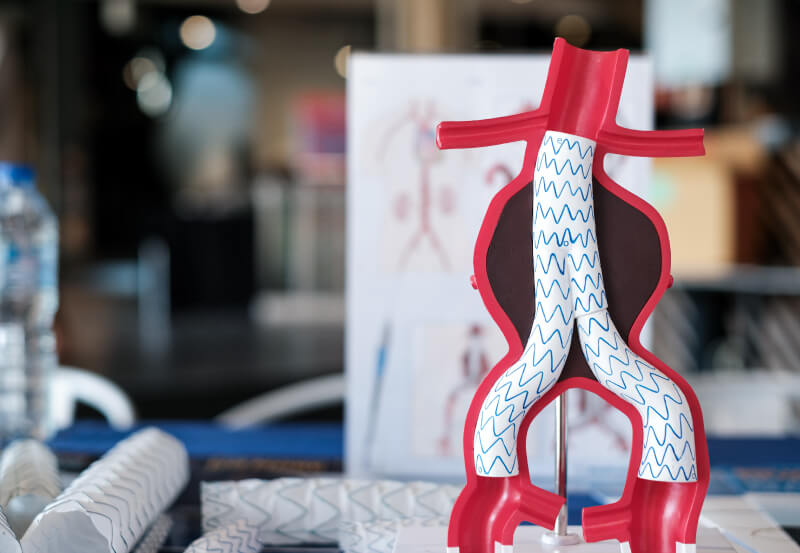
A total of 27 observational studies involving 36,822 patients treated with EVAR were included. Of these, 19,023 patients (51.7%) experienced aneurysm sac regression during follow-up, defined in most studies as a reduction of ≥5 mm in the maximum sac diameter. Mean age ranged from 70.8 to 77.3 years, and 18.2% of patients were women. The primary endpoint was overall survival, while secondary endpoints included freedom from reintervention, occurrence of endoleak during follow-up, aneurysm rupture, and the need for additional reinterventions.

Sac regression was associated with a significant reduction in all-cause mortality (HR 0.70; 95% CI 0.61–0.80; p<0.00001) and improved freedom from reintervention (HR 0.37; 95% CI 0.27–0.53; p<0.00001). In addition, patients with sac regression had a lower incidence of endoleaks during follow-up (15.6% vs. 18.2%; p<0.0001), a lower rate of reinterventions (2.6% vs. 3.6%; p=0.002), and a reduced risk of aneurysm rupture (RR 0.31; 95% CI 0.15–0.61; p=0.001).

Read also: Inflammation after TAVI: An Emerging Therapeutic Target?

In the subgroup of complex aneurysms treated with fenestrated or branched techniques (F/BEVAR), sac regression was also associated with a lower incidence of endoleaks (RR 0.50; 95% CI 0.27–0.93; p=0.03). However, differences in mortality, aneurysm rupture, and reintervention rates did not reach statistical significance.

Conclusión: Aneurysm Sac Regression Predicts Better Clinical Outcomes After EVAR

In conclusion, aneurysm sac regression following EVAR is consistently associated with improved survival and a lower incidence of aneurysm-related complications. These findings support the value of sac regression as a marker of favorable remodeling and as a potential risk stratification tool during the long-term follow-up of patients undergoing endovascular treatment.

Original Title: To regress or not to regress? Outcomes of aneurysm sac behavior after endovascular aortic aneurysm repair: A systematic review and meta-analysis.



 

Más artículos de este Autor

SPYRAL Program: 3-Year Outcomes in Patients Treated with Renal Denervation

Hypertension is the leading modifiable risk factor for cardiovascular disease and remains a major global health challenge, affecting more than one billion adults worldwide.  Despite...

Drug-Eluting Stents in Peripheral Arterial Disease: When Should They Be Used?

Peripheral drug-eluting stents have transformed the treatment of peripheral arterial disease by reducing restenosis rates and the need for repeat interventions. However, the emergence...

SCAI 2026 | Deep vein arterialization as an alternative in patients with critical limb ischemia without conventional options

Critical limb ischemia (CLI) represents one of the most advanced stages of peripheral arterial disease (PAD). In a significant proportion of patients, distal anatomy,...

C-TRACT: Endovascular therapy in post-thrombotic syndrome due to iliac obstruction

Post-thrombotic syndrome (PTS) is one of the most limiting sequelae following proximal deep vein thrombosis (DVT). It clinically manifests as chronic pain, edema, skin...

LEAVE A REPLY

Please enter your comment!
Please enter your name here

Artículos relacionados

Jornadas Guatemala 2026
Jornadas SOLACIspot_img

Artículos recientes

Inflammation after TAVI: An Emerging Therapeutic Target?

Conduction disturbances and the need for permanent pacemaker implantation remain common complications following TAVI, with an incidence approaching 15%. Although they have traditionally been...

SPYRAL Program: 3-Year Outcomes in Patients Treated with Renal Denervation

Hypertension is the leading modifiable risk factor for cardiovascular disease and remains a major global health challenge, affecting more than one billion adults worldwide.  Despite...

Coronary Obstruction During TAVI: A New Volumetric Index to Consider

Coronary obstruction during TAVI is an uncommon but potentially catastrophic complication, particularly in valve-in-valve procedures, in anatomies with small sinuses of Valsalva, low coronary...