






At present, the structural failure of mitral bioprostheses due to their deterioration poses a significant challenge. While in high-risk patients the mitral valve-in-valve option is considered a reasonable alternative, available information is limited, and the best strategy for intermediate-risk patients remains unclear.
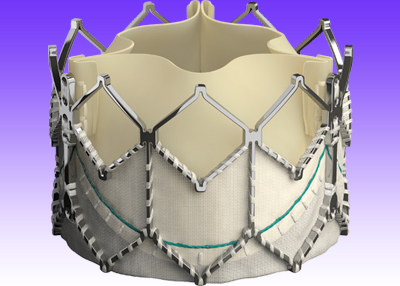
The PARTNER 3 MViV study is a prospective multicenter study that included 50 intermediate-risk patients with failure or dysfunction of mitral biological prostheses.
The primary endpoint (PEP) was a composite of all-cause mortality or stroke at one year.
The average patient age was 70 years. More than half of the subjects (27 of them) were women. The STS mortality score was 4.1%. In terms of comorbidities, 9 patients had diabetes, 3 had experienced a previous infarction, 1 had a history of stroke, 16 had coronary artery disease, 26 had atrial fibrillation, 7 had chronic obstructive pulmonary disease (COPD), 22 had high systolic pulmonary artery pressure, 10 had undergone myocardial revascularization surgery, 3 had undergone percutaneous transluminal coronary angioplasty (PTCA), 6 had undergone aortic valve intervention, and 4 had a pacemaker implanted.
The average time since surgery was 11 years. The cause of bioprosthesis failure was stenosis in 23 patients, regurgitation in 17, and mixed regurgitation and stenosis in the remainder.
Read also: IVUS Optimized Left Main 2-Stent Strategy: Should We Drop the 5-6-7-8 Criterion?
The average valve area was 0.9 cm², the mean gradient was 12.3 mmHg, and the indexed velocity was 4.8. Additionally, 17 patients had moderate or greater mitral regurgitation.
The procedures were performed via transseptal puncture, using SAPIEN 3 valves (26 mm or 29 mm). Technical success was achieved in 49 patients.
At the one-year follow-up, no patient had experienced the PEP or complications such as infarction, endocarditis, or the need for valve reintervention. During the follow-up period, two patients required pacemaker implantation and another two were hospitalized for heart failure. Additionally, there were two cases of symptomatic valve thrombosis, both resolved with anticoagulation therapy.
Read also: Edge-to-Edge Tricuspid Valve Repair 3-Year Follow Up.
In the echocardiogram performed at 12 months, there was no evidence of paravalvular regurgitation or moderate or greater mitral regurgitation. The mean gradient was 3.1 mmHg, and the indexed velocity was 3.1.
Furthermore, there were improvements in functional class, quality of life, and the six-minute walk test compared to pre-procedure conditions.
Conclusion
Mitral valve-in-valve with balloon-expandable valves using a transseptal access in intermediate-risk patients was associated with improvement in symptoms and quality of life, with good transcatheter valve performance and no mortality or stroke at the one-year follow-up.
Original Title: One-Year Outcomes of Transseptal Mitral Valve-in-Valve in Intermediate Surgical Risk Patients.
Reference: S. Chris Malaisrie, et al. Circ Cardiovasc Interv. 2024;17:e013782. DOI: 10.1161/CIRCINTERVENTIONS.123.013782.
Subscribe to our weekly newsletter
Get the latest scientific articles on interventional cardiology



