






Patients with diabetes often present with more complex coronary artery disease compared to non-diabetic patients, with a higher prevalence of diffuse or multivessel disease. Additionally, they are at increased risk for complications related to percutaneous coronary intervention (PCI) with stenting, such as stent thrombosis and restenosis. Despite advancements in PCI technique, diabetes remains an independent predictor of adverse events.
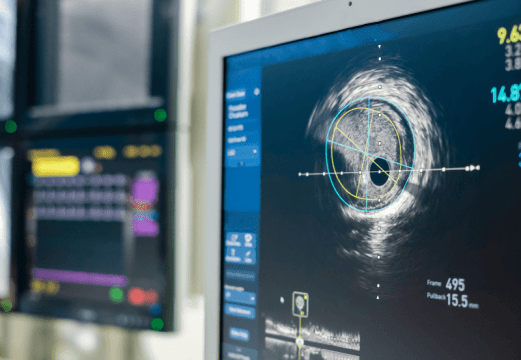
Various randomized studies have demonstrated the superiority of both fractional flow reserve (FFR) and intravascular ultrasound (IVUS) over conventional angiography. Recently, the FLAVOUR study showed that, in intermediate lesions, the use of FFR or IVUS resulted in comparable clinical events after a 24-month follow-up.
Researchers analyzed adverse events after PCI guided with FFR or IVUS in the diabetic population of the FLAVOUR trial. The primary endpoint was the incidence of major adverse cardiovascular events (MACE), defined as death, acute myocardial infarction (AMI), or repeat revascularization at 24 months. The secondary endpoint was target-vessel failure (TVF), defined as cardiac death, target vessel AMI, or target-vessel revascularization.
Of the 1682 patients randomized in FLAVOUR, 32.9% had diabetes and were included in this subanalysis. The average age was 64.9 years, with a SYNTAX score of 8.64±6.03. Compared to non-diabetic patients, those with diabetes had a higher prevalence of multivessel disease and, in the IVUS group, a smaller minimal luminal area (MLA) and higher plaque burden (PB). The IVUS-guided group had a higher incidence of PCI compared to the FFR group, for both diabetic and non-diabetic patients.
Read also: TAVR in Bicuspid Valves: Higher Prosthesis Mismatch?
There were no significant differences in the MACE rate between diabetic patients treated with FFR versus IVUS (9.3% vs. 8.3%, hazared ratio [HR] 0.96, 95% confidence interval [CI]: 0.54-1.73; p=0.90), nor in the incidence of TVF (2.9% vs. 3.6%, HR 1.35, 95% CI: 0.51-3.56; p=0.55).
Conclusions
In this FLAVOUR substudy, there were no significant differences in the incidence of MACE or TVF between diabetic and non-diabetic patients treated with FFR or IVUS. The use of IVUS was associated with higher stent implantation rates, which was consistent with the findings of the main study.
Reference: Cho SW, Kang J, Zhang J, Hu X, Hwang JW, Kwak JJ, Hahn JY, Nam CW, Lee BK, Kim W, Huang J, Jiang F, Zhou H, Chen P, Tang L, Jiang W, Chen X, He W, Ahn SG, Yoon MH, Kim U, Lee JM, Hwang D, Ki YJ, Shin ES, Kim HS, Tahk SJ, Wang J, Koo BK, Doh JH. Fractional flow reserve- and intravascular ultrasound-guided strategies for intermediate coronary stenosis and low lesion complexity in patients with or without diabetes: a post hoc analysis of the randomised FLAVOUR trial. EuroIntervention. 2025 Feb 3;21(3):e183-e192. doi: 10.4244/EIJ-D-24-00589. PMID: 39901633; PMCID: PMC11776404.
Subscribe to our weekly newsletter
Get the latest scientific articles on interventional cardiology



