

Severe coronary artery disease (CAD) frequently causes left ventricular function deterioration, and is often treated with myocardial revascularization surgery (CABG), especially when ejection fraction is ≤35%.
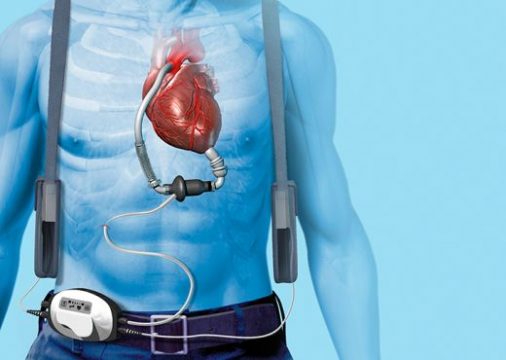
However, CABG is not always a viable choice, because of multiple comorbidities, which makes percutaneous coronary intervention (PCI) a valid alternative. In this scenario, chronic total occlusion (CTO) is frequent, which increases the risk of complications and ischemia during procedure, be it anterograde or retrograde, compromising also donated vessels. Even though still controversial, in these cases, using mechanical circulatory support devices can be the right strategy.
27 severe CAD patients were analyzed; there was at least one CTO and severe left ventricular dysfunction.
Primary end point was MACE, a composite of cardiovascular death, MI and target lesion revascularization (TLR) at 90 days.
Mean patient age was 63, and 25 were men. Mean EuroSCORE was 5.07. As regards comorbidities, 11 were diabetic, 19 hypertensive, 19 had cardiac failure, 7 prior PCI, 4 prior CABG, 2 prior stroke, 3 had atrial fibrillation, 9 had peripheral vascular disease and 7 had kidney function deterioration. Mean ejection fraction was 23 ± 7%.
Read also: Edge-to-Edge Repair in Central and Non-Central Mitral Regurgitation.
SYNTAX score was 37. In total, 38 CTO were treated; 14 patients presented three-vessel disease, and 11 two-vessel. The most frequent CTO was to the right coronary, followed by the anterior descending (AD) and, in lower proportion, the circumflex (CX). Mean J-CTO score was 2, with estimated MACE risk 2.5%.
Impella Access site was transfemoral for 23 patients, 3 were transaxillary procedures and 1 transcarotid. Complete revascularization was achieved in 15 patients (56%).
At hospital level, one patients died of pericardial effusion, another had an MI and 3 had vascular complications.
Read also: TAVR in Bicuspid Valves: Higher Prosthesis Mismatch?
At 90 days, the primary outcome was seen in 3 patients: two deaths and 1 TLR. However, 22 patients experienced significant improvement of angina and dyspnea. Also there was a significant increase in ejection fraction, up to 33%, with a relevant reduction of systolic and diastolic volume.
Conclusion
In high risk patients with severe ventricular function deterioration and complex anatomy, including CTO, PCI with mechanical circulatory support with Impella was associated with a favorable evolution in terms of safety and efficacy at short term.
Original Title: Mechanical Circulatory Support With Impella in High‐Risk Patients With Chronic Total Occlusion and Complex Multivessel Disease.
Reference: Ignacio Gallo, et al. Catheterization and Cardiovascular Interventions, 2025; 105:883–890 883 of 980 https://doi.org/10.1002/ccd.3139.
Subscribe to our weekly newsletter
Get the latest scientific articles on interventional cardiology