Left atrial appendage occlusion (LAAO) represents an effective alternative to oral anticoagulation (OAC) in patients with non-valvular atrial fibrillation at high risk of thromboembolic events. However, aspects such as procedural safety (pericardial effusion), device-related thrombus (DRT) and peridevice leak (PDL) continue to hinder their generalized adoption.
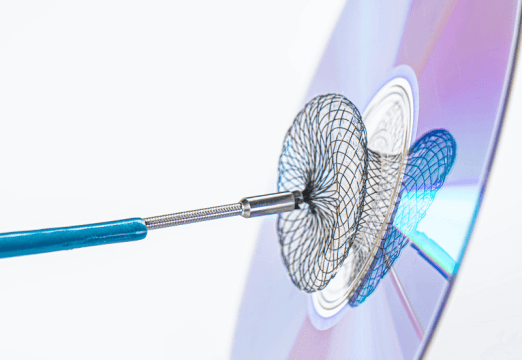
Compared against its predecessor (Watchman 2.5), the Watchman FLX incorporates significant structural improvements: a closer distal edge with modified anchors for easier recapture, higher number of struts, and expanded membrane designed to reduce the incidence of PDL and DRT.
In this study, de Price et al. assessed the clinical efficacy of the Watchman FLX vs the first generation device by comparing a matched cohort of 27,141 patients per group, from 641 centers in the US, using data from the NCDR-LAAO registry.
Mean patient age was 76, 59% were men, with mean CHA2DS2-VASC score 4.9 and HAS-BLED score 2.9 ± 1.1.
45 days after implantation, there was similar incidence of device related thrombus (0.4% vs. 0.5%; p = 0.27); however, the Watchman FLX showed a significant lower rate of PDL (14.7% vs. 23.5%; p < 0.001), including PDL >5 mm (0.3% vs. 0.6%; p < 0.0001).
Read also: Chronic Stent Recoil and Its Long-Term Effects.
Most patients were reassessed at one year, when the Watchman FLX was associated with lower risk of mayor adverse events (MAE) (HRa 0.84; CI95%: 0.80–0.88; p < 0.0001), ischemic stroke (HRa 0.82; CI95%: 0.68–0.98; p = 0.02), and the combination of ischemic stroke or systemic non-cerebral systemic embolism (HRa 0.74; CI95%: 0.62–0.87; p = 0.0003).
There was also a significant reduction in major bleeding (HRa 0.71; CI95%: 0.66–0.76; p < 0.0001), even though we should note prescription DOAC rate at discharge was higher among FLX patients.
There were no significant differences in total mortality (HRa 0.97; CI95%: 0.91–1.03; p = 0.27), and results remained consistent after adjusting with propensity score.
Conclusions
The Watchman FLX has shown superior safety profile and better clinical effectiveness at one-year vs its predecessor, which supports the positive impact of its modified features on enhancing periprocedural safety and long term outcomes.
Original Title: Clinical Effectiveness of Transcatheter Left Atrial Appendage Occlusion With Watchman FLX Compared With First-Generation Watchman.
Reference: Price MJ, Tan Z, Zimmerman S, Curtis JP, Freeman JV. Clinical Effectiveness of Transcatheter Left Atrial Appendage Occlusion With Watchman FLX Compared With First-Generation Watchman. JACC Cardiovasc Interv. 2025 May 26;18(10):1318-1326. doi: 10.1016/j.jcin.2025.03.025. PMID: 40436498.
Subscribe to our weekly newsletter
Get the latest scientific articles on interventional cardiology