Grupo MIL promotes equity and diversity in interventional cardiology at SOLACI-SOCIME 2025

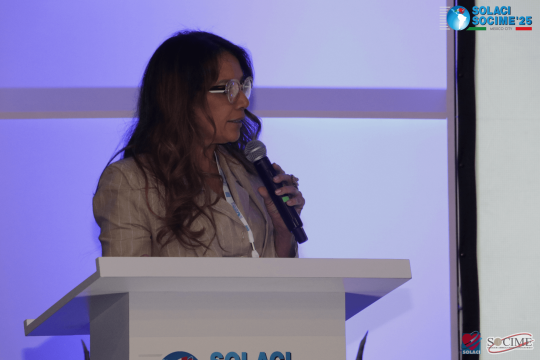
As part of the SOLACI-SOCIME 2025 Congress, the most important interventional cardiology event in Latin America, a notable scientific session was held at Expo Santa Fe, organized by the Grupo de Mujeres Intervencionistas Latinoamericanas (MIL).
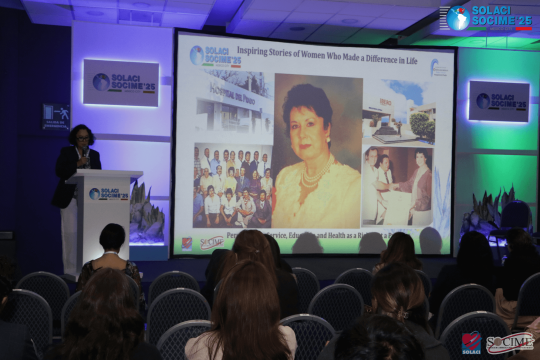
Under the title “Equity and Diversity in Interventional Cardiology: Why Is It Important?”, the session brought together renowned specialists from across the region, who shared experiences, strategies, and reflections on the role of gender equity and diversity in the field. The session was coordinated by María Antonieta Albanez and Fernanda Mangione (Brazil), with a distinguished panel of experts including Ludimilla Tartuce (Brazil), Anahí Florencio (Argentina), Andrea Robaina (Venezuela), and Guadalupe Jiménez (Mexico).

The program featured high-level academic presentations:

  • Patricia Aubanel (Mexico) presented Inspiring Stories of Women Who Have Reached Prominent Positions, sharing lessons learned and strategies for professional growth.
  • María Antonieta Albanez (Brazil) offered practical recommendations on Participation in Congresses and Scientific Publications, covering the preparation of competitive abstracts, impactful presentations, and strengthening of the academic CV.
  • María Sanali Paiva (Brazil) spoke on Gender Equity and Institutional Leadership, highlighting the importance of inclusive policies.
  • Finally, Emma Miranda (Mexico) and Carla Agatiello (Argentina) interviewed renowned specialist Mayra Guerrero on Leadership Pathways of Women in Interventional Cardiology.
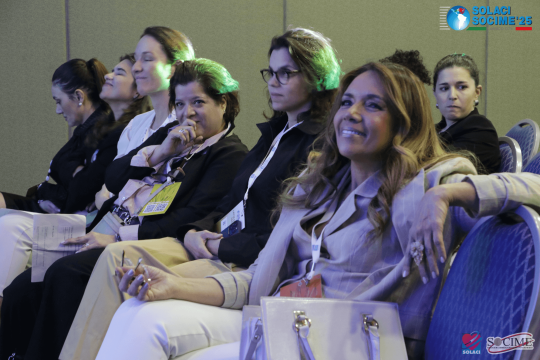
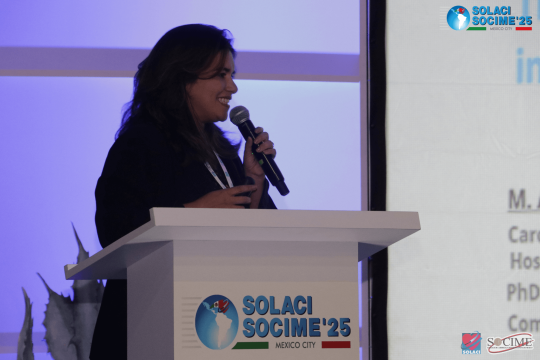
    The session was a testament to the commitment of SOLACI-SOCIME and the MIL Group to promoting diversity, highlighting female leadership, and strengthening the Latin American scientific community in interventional cardiology. The quality of the presentations and the expertise of the participants reaffirmed the value of these spaces for advancing the specialty in the region.


    Subscribe to our weekly newsletter

    Get the latest scientific articles on interventional cardiology

     

    More articles by this author

    Fellow’s Corner – Case 1: Chronic Total Occlusion Treated via Retrograde Approach. A True Challenge

    Share your experience. Learn from experts. Grow as an interventionalist. We present the first case of this new edition of The Fellow’s Corner, an academic...

    Call For Science SOLACI & SBHCI 2026 – Submit Your Work!

    We invite you to submit scientific papers and challenging clinical cases for the SOLACI & SBHCI 2026 Congress, taking place from July 29 to...

    Watch again “Ultrasound Pulses + Calcium = Coronary Lithotripsy” | SOLACI Technicians Webinar

    The webinar “Ultrasound Pulses + Calcium = Coronary Lithotripsy”, held on March 24, 2026 via the Zoom platform, is now available for viewing on...

    SOLACI invites you to the 5th International Conference on Clinical and Interventional Cardiology in the Dominican Republic

    The Latin American Society of Interventional Cardiology (SOLACI) invites the community to the 5th International Conference on Clinical and Interventional Cardiology (Coronary and Structural),...

    LEAVE A REPLY

    Please enter your comment!
    Please enter your name here

    Related Articles

    SOLACI Sessionsspot_img

    Recent Articles

    High Ischaemic Risk Criteria in Chronic Coronary Syndrome: Prevalence and Prognosis

    Despite advances in the management of chronic coronary syndrome (CCS), including the widespread use of drug-eluting stents (DES) and the optimization of medical therapy,...

    Management of Valve Thrombosis in TAVI: Current Evidence-Based Approach

    The expansion of transcatheter aortic valve implantation (TAVI) into younger and lower-risk populations has brought bioprosthetic valve thrombosis to the forefront as a clinically...

    Experience with the intra-annular self-expanding Navitor valve: data from the STS/ACC TVT registry

    The expansion of TAVI, with the introduction of new-generation devices, has prioritized not only periprocedural safety, but also the preservation of coronary access, more...