






The no-reflow phenomenon is one of the most frustrating complications of primary angioplasty (pPCI), reflecting persistent microvascular damage that, in the mid- to long-term, leads to larger infarct size, worse ventricular remodeling, and therefore a poorer prognosis. In this setting, intracoronary pharmacological treatment is heterogeneous, and many therapeutic decisions are based more on operator experience than on solid scientific evidence.
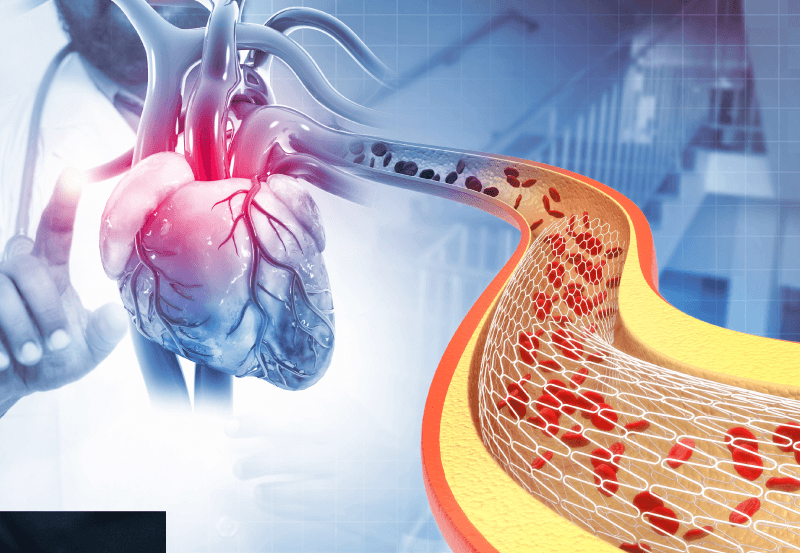
Oliveri et al. conducted a network meta-analysis of randomized studies comparing the most commonly used intracoronary drugs for the treatment of no-reflow during pPCI. The aim was to compare the relative efficacy of intracoronary adenosine, epinephrine, nitroprusside, and verapamil.
The primary endpoint (PE) was restoration of final TIMI 3 flow. Secondary endpoints (SE) included ST-segment resolution, the presence of TIMI 2–3 flow, and the occurrence of MACCE.
A total of 13 randomized studies were included, involving approximately 1,680 patients with STEMI undergoing pPCI complicated by no-reflow or persistent no-flow.
Verapamil and Epinephrine Show the Highest Angiographic Efficacy for Treating No-Reflow During Primary PCI
The main finding of the analysis was that both epinephrine and verapamil were associated with higher odds of achieving TIMI 3 flow compared with control (usually placebo). For epinephrine, the OR was 2.81 (95% CI: 1.72–4.58) and for verapamil 2.84 (95% CI: 1.63–4.95), without significant heterogeneity. In contrast, neither adenosine nor nitroprusside showed a statistically significant benefit.
Read also: Coronary revascularization before TAVI: prior PCI or conservative management?
When evaluating the secondary endpoint of TIMI 2–3 flow, only epinephrine and verapamil showed a favorable effect compared with control, with ORs of 3.33 (95% CI: 2.00–5.54) and 2.94 (95% CI: 1.70–5.07), respectively.
Regarding ST-segment resolution, epinephrine demonstrated the most pronounced effect, with an OR of 4.30 (95% CI: 2.19–8.45), followed by verapamil with an OR of 2.85 (95% CI: 1.64–4.96). Adenosine showed a modest favorable effect in a frequentist analysis, with an OR of 1.38 (95% CI: 1.04–1.84).
When a ranking analysis according to the network meta-analysis was performed, verapamil ranked as the strategy with the highest probability of achieving final TIMI 3 flow.
It should be noted that these findings did not translate into a sustained clinical benefit, as none of the evaluated therapies demonstrated a significant reduction in MACE or mortality.
Conclusions: Meta-analysis in STEMI Patients: Intracoronary Therapy Improves TIMI Flow but Does Not Reduce MACE or Mortality
This network meta-analysis positioned verapamil and epinephrine as the intracoronary therapies with the best angiographic performance (final TIMI 3 flow) for the treatment of the no-reflow phenomenon during pPCI.
Original Title: Intracoronary Vasoactive Therapy for No-Reflow During Primary PCI. A Network Meta-Analysis of Randomized Trials.
Reference: Oliveri F, Tua L, Raone L, Sparasci FM, Ferlini M, Mandurino-Mirizzi A, De Luca L, Arslan F, Bingen BO, Montero-Cabezas JM. Intracoronary Vasoactive Therapy for No-Reflow During Primary PCI: A Network Meta-Analysis of Randomized Trials. JACC Adv. 2026 Feb 24;5(3):102599. doi: 10.1016/j.jacadv.2026.102599. Epub ahead of print. PMID: 41740240; PMCID: PMC12955103.
Subscribe to our weekly newsletter
Get the latest scientific articles on interventional cardiology



