






Courtesy of Dr. Carlos Fava.
The presence of renal dysfunction in the “real world” is over 25% in patients who undergo transcatheter aortic valve implantation (TAVI).
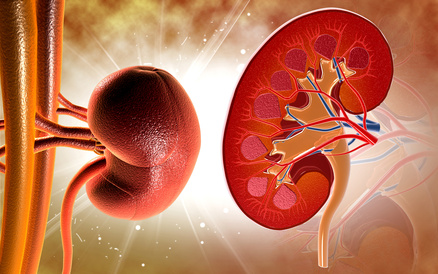
The evolution of this disease among patients who are subjected to a replacement is well known, but evidence for patients who undergo TAVI is still limited, particularly for those who require dialysis.
This study analyzed 42,189 patients who underwent TAVI between 2011 and 2014. Among them, 14,252 (33.7%) presented renal dysfunction (chronic kidney disease, CKD), 1708 (4%) suffered from end-stage kidney disease (ESRD), and the remaining 26,229 (62.1%) had no CKD/ESRD.
Read also: “Bioresorbable Scaffolds Must Not Be Chosen Over Current DES”.
Most patients with CKD were elderly males, of a lower socio-economic level, who had more comorbidities, followed by patients with ESRD.
The procedure was carried out using a transfemoral access in 80% of all cases and transapical access in 20% of all cases.
In-hospital mortality was higher in patients with ESRD, followed by the CKD group, and the no-CKD/ESRD group (8.3%, 4.5%, and 3.7%, p < 0.001, respectively). Hospital stay was longer for the CKD/ESRD groups, compared with patients without CKD/ESRD (5-17 days, 4-10 days, and 4-8 days, p < 0.001, respectively). The rate of mortality and the rate of hospital stay both persisted after adjusting variables.
Read also: “REPRISE III: Need for Pacemaker and Paravalvular Leak with Lotus”.
Major bleeding, need for a pacemaker, and need for ventilation were all more frequent in the groups with kidney dysfunction. Furthermore, these groups presented a marked trend towards more respiratory complications.
The rate of stroke was similar among all groups, except for higher rates in the ESRD group whenever it was associated with atrial fibrillation.
Among patients with CKD, stages 3, 4 and 5 were associated with higher rates of mortality and major bleeding.
Conclusion
Patients with CKD and ESRD have increased in-hospital mortality and peri-procedural adverse events with longer hospital length of stay, when compared with those without CKD/ESRD.
Editorial Comment
This is the largest analysis on renal function compromise and its in-hospital evolution.
Patients were analyzed between 2011 and 2014. Current results may have possibly improved a bit due to more experience and, surely, the fact that we now generally use less contrast than we did in the early days.
Furthermore, we must learn to determine accurately the CKD stage of patients, since their in-hospital evolution will depend on it.
We must certainly analyze this patient group more carefully and, perhaps, take active measures to try to reduce complications.
Courtesy of Dr. Carlos Fava.
Original title: Comparative Outcomes of Patients with Advanced Renal Dysfuntion Undergoing Trancatheter Aortic Valve Replacement in the United States from 2011 to 2014.
Reference: Dyvyanshu Mohananey, et al. Circ Cardiovas Interv 2017;10:e005477 DOI:10.1161.
Get the latest scientific articles on interventional cardiologySubscribe to our weekly newsletter
We are interested in your opinion. Please, leave your comments, thoughts, questions, etc., below. They will be most welcome.



