The presence of a high percentage of calcium in the left main coronary artery is independently associated with a 20–30% greater risk for cardiovascular and all-cause death in asymptomatic adults. This highlights the fact that calcium location, and not only amount, is important. Calcium scoring reports from computerized tomography (CT) usually inform only that: how much calcium there is in the coronary tree. However, knowing its location seems to be equally or more important, and that should begin to be routinely informed as well.
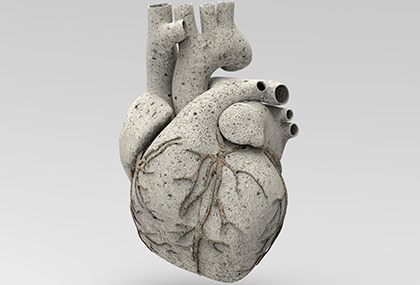
This work, which has been recently published in Atherosclerosis, studied precisely ‘where,’ since calcium scores do not account for location. This information is significant; we have known for many years now that left main coronary artery lesions are associated with a higher risk of infarction and related death than any other location in the coronary tree.
Cause-specific cardiovascular and all-cause mortality was studied in 28,147 asymptomatic patients with non-zero calcium scores. Researchers conducted a multivariate analysis to assess whether the presence of calcium in the left main coronary artery might predict events after adjustment for multiple risk factors. The per-Agatston unit risk associated with calcium in the left main coronary artery in comparison to calcium in other vessels was also analyzed.
Read also: DES with Bioresorbable Polymer vs. Bare Metal Stents in Primary PCI.
The study population had a mean age of 58.3 ± 10 years and a calcium score of 301 ± 631. About 21.7% of the population had visible calcium in the left main coronary artery.
Left main coronary artery calcium was associated with a higher number of risk factors and total calcium in the coronary tree, and it was an independent predictor for increased risk of all-cause death (hazard ratio [HR]: 1.2) and cardiovascular death (HR: 1.3).
The risk of death increased proportionately to the amount of calcium localized to the left main coronary artery. On a per-100 Agatston unit basis, left main coronary artery calcium entailed an increase of 6%–9% in the risk of death beyond knowledge of calcium in other arteries.
Conclusion
The presence of calcium in the left main coronary artery, as assessed by CT, is independently associated with a 20%–30% increase in mortality in asymptomatic adult patients. If calcium is found in the left main coronary artery during a CT scan for calcium scoring, that information should be included in the report.
Original title: The association between left main coronary artery calcium and cardiovascular specific and total mortality: The Coronary Artery Calcium Consortium.
Reference: Steven J. Lahti et al. Atherosclerosis. 2019 Jul;286:172-178.
Subscribe to our weekly newsletter
Get the latest scientific articles on interventional cardiology
We are interested in your opinion. Please, leave your comments, thoughts, questions, etc., below. They will be most welcome.