






Permanent pacemaker implantation following transcatheter aortic valve replacement (TAVR) continues to be one of the most frequent complications. Even though its real impact on prognosis continues to be controversial, its impact on healthcare cost is out of the question, in addition to being uncomfortable for patients.
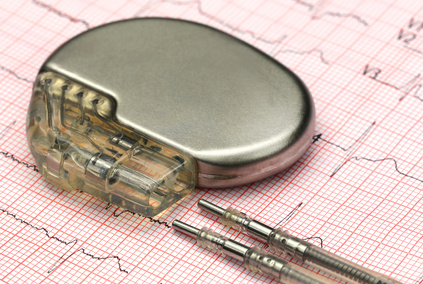
This study, soon to be published in J Am Coll Cardiol Intv, sought a way to minimize the risk of pacemaker implantation post TAVR with contemporary repositionable self-expanding transcatheter aortic valve replacement (TAVR).
It included 248 consecutive severe aortic stenosis patients undergoing self-expanding TAVR under conscious sedation with standard approach. Researchers looked at multiple factors that might contribute to definite pacemaker implantation rate and created an anatomically guided minimizing depth according to membranous septum (MIDAS). The idea behind this technique is to minimize implant depth relative to non-coronary sinus/ membranous septum distance.
Read also: The Era of Provisional Stenting for Bifurcations Comes to an End.
Pacemaker implantation predictors post TAVR were prior right bundle branch block, membranous septum length, larger devices (Evolut 34 XL) and deeper implantation relative to non-coronary cusp /membranous septum distance.
At multivariable analyzis, the only independent predictors were deeper implantation than the distance to membranous sinus (OR: 8.04 CI 95%: 2.58 to 25.04]; p<0.001) and Evolut 34 XL prosthesis (OR: 4.96 CI 95%: 1.68 to 14.63]; p=0.004).
The MIDAS technique was done prospectively in 100 consecutive patients after this analyzis. Operators’ goal was pre-release depth in relation to the noncoronary cusp of less than the length of the membranous septum.
With this technique, researchers succeeded in reducing pacemaker implantation rate from 9.7% to 3% (p=0.035) and left bundle branch block from 25.8% to 9% (p<0.001).
Conclusion
Using the MIDAS technique, we can find the right implantation depth specific to each patient, which predicts and reduces definite pacemaker implantation rate post self-expandable contemporary valve implantation.
Original Title: Minimizing Permanent Pacemaker Following Repositionable Self-Expanding Transcatheter Aortic Valve Replacement.
Reference: Hasan Jilaihawi et al. J Am Coll Cardiol Intv 2019, online before print.
Get the latest scientific articles on interventional cardiologySubscribe to our weekly newsletter
We are interested in your opinion. Please, leave your comments, thoughts, questions, etc., below. They will be most welcome.



